Answering Islam: An Interview with Norman L. Geisler (1994)


Answering Islam: An Interview with Norman L. Geisler

by Ron Rhodes

1994


Norman L. Geisler is a theologian, teacher, and the dean of Southern Evangelical Seminary in Charlotte, North Carolina. He has recently co-authored a book with Abdul Saleeb entitled “Answering Islam: The Crescent in the Light of the Cross” (Baker Books). In this issue of the “Newsletter”, Dr. Geisler is interviewed on a variety of issues related to this book.

Newsletter: Why do Christians need to be concerned about Islam?

Geisler: One out of every five persons on the face of the earth is a Muslim. One out of every five! In the United States Islam is growing at an astronomical rate. There are more Muslims than Methodists in the United States.

These are people who are diametrically opposed to Christianity’s most central belief — that Jesus Christ died on the cross and rose from the dead. Historically and theologically, many Muslims have been committed to the annihilation of unbelievers — which includes us.

Muslims believe Christians have committed the unpardonable sin of attributing “partners” to Allah — namely, belief in the Trinity. In Saudi Arabia they recently cut somebody’s head off for blaspheming the prophet Muhammad, which, by definition, my co-author (Abdul Saleeb) and I do on practically every page of our new book. Islam is a serious threat to Christianity.

Newsletter: But this book is not written in a hostile fashion towards Islam, towards the Qur’an, towards Muhammad, is it?

Geisler: No, it’s not. We take an objective, dispassionate, scholarly approach in dealing with (1) what Muslim’s believe (and, by the way, we believe a Muslim could pick this book up and agree with how we’ve described Islamic beliefs); (2) a Christian response to Islamic beliefs; and (3) an apologetic defense of what we believe as Christians.

Newsletter: Muslims are monotheists, right?

Geisler: Yes. Monotheism is the belief that there is one God. Jews and Christians are monotheistic. But Muslims are the most rigid monotheists in the world. They believe there’s not only one God but that there’s only one person in God (i.e., God doesn’t have a son). They confuse unity and singularity. Any other persons associated with God is considered blasphemy. It’s the great sin. God has no partners, Muslims say.

Newsletter: So, to say that Jesus Christ was the Son of God and that He was equal with God would be considered anathema.

Geisler: You just lost your head in Saudi Arabia!

Newsletter: Muslims say Muhammad was a prophet. And Muhammad in the Qur’an said Jesus Christ was a prophet. Assuming that prophets do not speak error, wouldn’t this present a logical problem for Muslims? After all, according to John 14:6, Jesus said, “I am the way and the truth and the life. No one comes to the Father except through me.” So, Jesus the “prophet,” being one-hundred percent correct, refutes Muhammad and all of Islam, right?

Geisler: That’s correct. And that’s a good approach to use. But you need to keep one thing in mind here. What Muslims say to that line of reasoning is that while they believe in the Christian Gospels, which represent Christ, they’ve been corrupted down through the centuries. And so Christians must answer that allegation.

We do this in our book, Answering Islam, by showing that we have manuscripts of the New Testament that go back hundreds of years prior to the time of Muhammad. Now, keep in mind that Muhammad referred to the New Testament Gospels of his day — and indicated their reliability. After all, he said to Christians: “Go and look in your own Gospels.”

Well, if the Gospels of his day (A.D. 600) were accurate — and we’ve got manuscripts that go back even before that — then they’re in a pretty tough dilemma to explain why you shouldn’t follow the logic you suggested above: Jesus is a prophet; He always teaches the truth; and if He taught He was the only way to God, then how can Christianity not be true?

Newsletter: What specifically does the Qur’an teach about Jesus Christ?

Geisler: It’s strange that while Muslims think Jesus was only a man — a prophet superseded by Muhammad — at the same time the Qur’an teaches that Jesus Christ was the Messiah, the Word of God, a speaker of truth, a sign unto men of mercy from God. It teaches that Jesus was virgin born, sinless, performed supernatural miracles (including raising people from the dead), and bodily ascended into heaven. All of this is affirmed of Jesus Christ in the Qur’an. The crucial thing Muslims don’t believe is that Jesus died on the cross for our sins and rose from the dead.

One must emphasize to the Muslim that the Jesus of the New Testament claimed to be God, not just a prophet. We have a whole chapter in our book on the deity of Christ. Jesus said, “I and the Father are one” (John 10:30). In John 8:58 Jesus said to some Jews, “Before Abraham was, I am,” thereby claiming to be God (cf. Exod. 3:14). He received worship on many different occasions. One of His disciples bowed before Him and said, “My Lord and my God” (John 20:28), acknowledging His full deity. Jesus forgave sins, which only God can do (Mark 2:5-7). Jesus resurrected people from the dead, which only God has the power to do (John 11:38-44). So Jesus in many different ways is shown to be God, not just a prophet. The Bible and the Qur’an are irreconcilable on these ideas.

Newsletter: Interestingly enough, the Qur’an does not claim Muhammad was a miracle worker, does it?

Geisler: You’re right! And that’s a very important apologetic point. Nowhere in the Qur’an does it record Muhammad performing any supernatural feats of nature. In fact, he disavowed such an ability. When asked, “Why don’t you perform miracles like the other prophets did?” he responded: “This is my miracle, the Qur’an.” The Qur’an is said to be the only miracle of Muhammad.

Newsletter: Speaking of the Qur’an, this book does not portray God as a heavenly Father, does it?

Geisler: No, it doesn’t. There are 99 names for God in Islam. We have them listed in our book. Out of the 99, there is no mention of “Father.” And the reason for that is that Muslims are rigid monotheists. They believe that being a Father implies that he has a son, and that is considered blasphemous. God has no partners.

Newsletter: What is the Islamic concept of God in terms of human beings relating to him?

Geisler: The Islamic God is very remote, very transcendent. He is not immanent; he’s not personally involved with his creatures. The main thing in Islam is not fellowship with God, but service and allegiance to God. There is no fatherly concept of God at all. It’s very different from the concept of God found in the Christian Bible. In Christianity, believers are adopted into God’s family (Eph. 1:5) and can personally address God as Father (Rom. 8:15). It’s a relationship of great intimacy. Not so in Islam.

Newsletter: Islam and Christianity, then, set forth clearly different views of God and Jesus Christ, among other things. Both systems cannot be true.

Geisler: Right! There’s a big difference between the two systems. The answer to the question of truth is of eternal importance. If there’s a substantial difference between the two systems — and if your eternal soul depends on a correct choice of one system or the other — then it behooves everyone to examine seriously all the evidence and make a truly informed decision.

We can’t just say, “Well, I believe it, I was taught it, I was reared that way.” The question is, Which one is true? If Islam is true, Christianity is false. If Christianity is true, Islam is false.

Remember what Jesus Christ said: “I am the way, the truth, and the life, and no one comes to the Father but by me” (John 14:6). If Islam is right, then Jesus Christ was lying when He said that. Muslims say Jesus was a prophet, and prophets can’t lie. So they’re in a real dilemma here.

Newsletter: Any closing thoughts for Christians who want to become equipped for the work of apologetics?

Geisler: One of my teachers — a man who spent some twenty years in the Middle East, and made a great impression on my life — used to say that with regard to education and preparation for serving Christ, Get all you can! Can all you get! And sit on the lid! Then you’ll have everything you need to defend the faith as opportunities arise. Becoming equipped for the work of apologetics is an absolute necessity for Christians today.


End of document, CRN0072A.TXT (original CRI file name), “Answering Islam: An Interview with Norman L. Geisler” release A, July 31, 1994 R. Poll, CRI

An article from the Interview column of the Christian Research Newsletter, Volume 7: Number 1, 1994.

The Editor of the Christian Research Newsletter is Ron Rhodes.

Copyright 1994 by the Christian Research Institute.

COPYRIGHT/REPRODUCTION LIMITATIONS:
This data file is the sole property of the Christian Research Institute. It may not be altered or edited in any way. It may be reproduced only in its entirety for circulation as “freeware,” without charge. All reproductions of this data file must contain the copyright notice (i.e., “Copyright 1994 by the Christian Research Institute”). This data file may not be used without the permission of the Christian Research Institute for resale or the enhancement of any other product sold. This includes all of its content with the exception of a few brief quotations not to exceed more than 500 words.

If you desire to reproduce less than 500 words of this data file for resale or the enhancement of any other product for resale, please give the following source credit: Copyright 1994 by the Christian Research Institute, P.O. Box 7000, Rancho Santa Margarita, CA 92688-7000.


Interviews with Dr. Norm Geisler


An Interview with Dr. Geisler by Apologetics315


Christian History Magazine Interview of Norman Geisler about Thomas Aquinas


An interview with Christian Book Previews:


CBP:  I don’t think a lot of people know your background; what’s your testimony?  Would you like to share that?

Norm:  My testimony is that I was reared in a non-Christian family.  My parents were anti-religious, my father was an ex-Roman Catholic, my mother was an ex-Lutheran.  The priest wouldn’t marry them in those days.  Finally a priest asked my father for a $500 bribe to marry them and break the rules.  My father told him to go and jump in a lake, and he never went back to church.

So I was reared in kind of a bitter ex-Catholic, non-religious family.  My relatives on both sides — I have about a hundred first cousins.  My father had ten in his family, my mother eight.  So I have over one-hundred first cousins.  They’re all Roman Catholic.  My favorite uncle was an atheist.  He was kind of a lone ranger on my mother’s side.  And when I was nine, the first time I remember going to church was at a funeral, and I saw a picture on the wall, and I asked my mother if that was Santa Claus.  It was Jesus.  I didn’t know the difference between Jesus and Santa Claus.

Shortly after, a little Sunday school picked me up for Vacation Bible School.  A little community church, Bible church, and I heard the gospel, I knew it was right and I knew I should be saved, but I rejected.  They picked me up on the Sunday school bus 400 times; every Sunday for eight years, till I was 17.  And I’ve often thought, 398 times and this kid shows no hope whatsoever, let’s give up on him.  They came back and I had a youth director come to the church and he spoke in Sunday school class, and I was so convicted.  I went home got down on my knees by my bedside – I was a senior in high school then – and committed myself to Christ.  It was kind of a 180˚ revolutionary thing, given my background and given my years of rejection.

So when I became a Christian on Sunday, Monday they took me door to door – these were very zealous people that discipled people quickly.  Tuesday I did cold turkey street meetings, Wednesday was prayer meeting, Thursday was jail service – I met my wife in jail, she was playing the pump organ in the middle of church, and I was giving my testimony – Friday was city rescue mission, and Saturday was Youth for Christ, and Sunday was church.  That was my week.  I thought that everybody gave 100% of their time for the Lord.  I thought that’s what Christians did.  That’s what everybody I knew who was a Christian did.

A few weeks later, I was in what was called “skid row,” the ghetto we call it now.  Downtown Detroit, where I’m from, and I was witnessing — had my Bible – and a drunk staggered up to me and this is what he said, “I’m a graduate of Moody Bible Institute, and you’re not supposed to be doing this.”  And I said, “What?”  “Telling people about Jesus.”  He grabbed my bible – it was a red-letter edition – pointed, the guy said, “Read that.”  Jesus said, “Go and tell no man.”  He said, “Now, get out of here.  Jesus doesn’t want you to do this.”

I had no idea what that verse meant.  But it had already been twisted by Jehovah’s Witness, and Mormons, and I had to make a decision.  I was making a fool of myself out there because I couldn’t answer anybody’s questions.  All I knew was I was saved and John 3:16.  I was either going to have to get answers or stop witnessing, so I decided to get answers.

And so I spent the next 20 years going to college and graduate school getting two Bachelors’, two Master’s, and a Doctorate degree, and this is my 45th year of teaching now.  Teaching others – of course my passion is apologetics – so the rest is history, as they say.

CBP:  Now, based on what you did, going to school to learn about God so that you could respond to people, what do you think the average Christian’s responsibility is to know the Word.  How far should we go, should we all get Master’s and Doctorate’s?

Norm:  No, but we should all get answers.  Not everybody has to get a Master’s degree but they can get answers.  I Peter 3:15 was not just written for people who are ministers or teachers.  It says that every Christian should set aside the Lord in our hearts and be ready always to give an answer to everyone who asks us a reason of the hope that’s in us. And Colossians 4:6 says, “Let you speech always be with grace, as though seasoned with salt, so that you will know how you should respond to each person.”

So, everyone needs to get answers and get equipped.  I had the raw material when God picked me, I was way behind you.  I couldn’t read, I was a senior in high school, I had never read a book.  I made it all the way through high school without ever reading a book.  I got kicked out of literature class in the 11th grade because the teacher asked me, “How did the Tale of Two Cities End?”  And I answered, “With a period.”  And she had no sense of humor, the period ended for me, I was sent to the principal’s office.  So that was me before I was a Christian.  I was in remedial reading class in the 11th grade; I went to school for two reasons and two reasons only, sports and girls.  If it hadn’t been for sports and girls, I would have never made it through school.  But I did.  I made it through.  Sports kept me there, and then in my senior year I started getting serious and made better grades that last semester, and then from then on, as they say, the rest is history.

There was a Bible school nearby – and the Bible is God’s Word.  I just got saved, and He wrote this whole thing for us, what else do you do?  I didn’t make any decision about going, that’s just the thing to do.  And from then on I went to Bible school, I finished college, I went to Wheaton College, went to graduate school, University of Detroit, Northwestern University, Loyola University, I went to six schools in 20 years;  one wife, six children and five degrees later.  So if God can do it with me, He can do it with anybody.

CBP:  That’s quite a story.  Now you have a set of volumes about Systematic Theology, what are they focusing on?

Norm:  Well, it’s a four-volume set.  It’s really two volumes in one – it’s really an eight volume set.  The first one is introduction and Bible–prolegomena, bibliology.  The second one is God and creation, and the third one is sin and salvation, the fourth one is church and last things.  And that’s written, but it takes a full year to process it because each volume was a thousand-pages-long manuscript, so I’ve written a thousand pages a year for the last four years, which keeps me off of drugs and off the roads –

CBP:  We’re all grateful for that, too.

Norm:  And before that I wrote the encyclopedia for apologetics and that was three-thousand pages, and I did a thousand pages a year for three years.  That boils down to about four hours a day, five or six days a week for seven years just for those five books.

CBP:  So, is it a culmination of all the study you’ve had?  Because if you’re writing steadily that much, then you’re not doing a lot of research I would think.

Norm:  I am, I am.  I’m doing research and writing at the same time.  It’s equivalent of writing a 15-20 page term paper every day for seven years.

CBP:  And somebody has to go through and edit that too.

Norm:  My dear wife is – I’m good at big ideas and she’s good at getting the details.

CBP:  Well, how do you recommend to someone who is a believer and knows the basics, to educate themselves better?  

Norm:  What motivates me to get up in the morning is ignorance.  I have an insatiable desire to learn God’s truth.  I just love truth, I love the Bible, I want to know, and I want to share.  It boils down to motivation.  They have to be motivated first.  They have to see some reason and purpose for it.

Where to start – when I started out, that was 1950, so I’ve been really, for all intents and purposes, full-time ministry since the day I was saved, which is 54 years ago now – and literally full-time pastoral ministry, I was ordained in 1954.  When I started out, I didn’t know much either, but you just have to keep reading and keep learning.

The key to that to me is the old IRA: Impression, Repetition, Association.  It’s got to impress you.  If the Word of God doesn’t impress you, I don’t know what’s going to impress you.  Repeat:  You’ve got to share it over and over with other people.  Association:  I memorized hundreds and hundreds of verses when I was first saved.  It’s what the people around me did.  They say you’ve got to memorize the Bible, know verses that you can give to people.  And I associate them with things, you know, verses on sin, verses on assurance, verses on whatnot, so that’s the key.   To get motivated, repeat it over, use it, share it.  A few verses that I haven’t used much I’ve forgotten, the rest of the verses I use, I remember.

CBP:  That makes sense.  It’s just like speaking a language, if you don’t speak it then you lose it.

Norm:  If you don’t use it, you lose it.

CBP:  Well now, who do you think is going to read A Systematic Theology, being almost a thousand pages?

Norm:  Well, everybody because everybody needs to know who God is and how we relate to Him, and how He relates to His universe, and that’s what it’s all about.  It’s the theory of everything.  Everybody has a world view, and if they’re a Christian they have some kind of Christian world view for better or for worse.  And a Systematic Theology is what puts it all together.

What I would say to the average housewife, the average whatever it is ninth grade housewife who’s listening to Dobson doing the dishes, and reads all the books out there – everything in your kitchen, you have all the plates in one place and all the cups in another place, and all the glasses somewhere else, and all the silverware drawer, you have all the knives, forks and spoons all organized, right?  You don’t just go in the kitchen and they’re all piled together.  Well, that’s what A Systematic Theology does; it puts it all in categories:  there are all the verses about God, here’s all the verses about sin.  It may be a big two words – Systematic Theology—it’s just organizing God’s truth so that you can categorize it and understand it better.

CBP:  Do you think people use it as a reference, or as something that they can read straight through?

Norm:  Well, actually it’s good for insomnia.  Fifteen minutes before bedtime, it’s a sure cure for insomnia.

There are people who just sit down and read it.  They read so much – like my assistant at school is an avid reader.  She reads the encyclopedia straight through at bedtime.  Yeah, I think they can use it as a reference book.  And they can look up – it has an index, it has verses in the back, you can find anything you want to find and find out how it fits together and how to explain it, you can look up topically.  It’s an introduction and Bible.

CBP:  Well, speaking of salvation, because I know that you’re also talking a little bit about your book about being chosen –

Norm:  Chosen but Free?

CBP:  Chosen But Free, sorry.  I have the book and I actually bought it myself.  What do you think the major misconception is about salvation that you run into?

Norm:  Of course on the broad scale people think that somehow our works have something to do with salvation, they don’t.  It’s God’s grace.  It’s by grace alone, through faith alone, through the finished work of Christ alone, based on the Bible alone, for the glory of God alone.  There’s a lot of “alones” there but they’re very important in the thing.  But on a more popular scale, I think people don’t realize how comprehensive it is.  Salvation is a total process from the day – from before you’re born actually.  God choosing us in whom before the foundation of the world is working on us by the Holy Spirit.  Is reaching and convicting us of our sin, it regenerates us.

The three stages of salvation:  Justification, sanctification, glorification.  Those are big words but it boils down to be saved from the penalty of sin, the moment you trespass, that’s a lifelong of being saved from the power of sin, and then you’re finally saved from the presence of sin.  And I think most people have no idea how big it is.  They think, “Well, I got saved.”  They think in the past tense.  Throughout 1950 I was saved.  You got started on the process of salvation – it’s a big thing.  From here to eternity you’ve got the rest of it.

CBP:  Well, that being the case then, is it consistent to say that you can have Christians that are alcoholics, or addicted to pornography, or something like that.  Because we read that we are no longer slaves to sin, we are slaves in righteousness in Christ.  

Norm:  Well, you can have Christians who are that, but they’re not good Christians, they’re not consistent Christians, and they’re Christians who might have been saved, but they’re not being saved.  The present tense of their salvation is getting robbed by the fact that they’re yielding to sin rather that getting the victory over it.   They’ve accepted Christ’s victory over the penalty of their sin, now they need to accept Christ’s victory over the power of their sin.  In Roman’s 7, The lamb who so delivered me from the body of this death, praise God through Jesus Christ our Lord.  And that’s right in the middle of the sanctification section in Romans.  So they need to look at Romans 6 – it’s not 12 steps AA, it’s 3 steps:  know, reckon, yield.  They know Christ did it, they’ve got to count it so, and they’ve got to yield their members as members of righteousness to get that victory.

CBP:  I’ve read that section that you’re referring to in Chapter 7 is more allegorical than it is about Paul, because

it says that he was more righteous than any of the Jews at the time, and yet he was still lost in sin.

Norm:  He says as touching the law he was totally righteous.  In other words, from a legalistic, technical, outward standpoint, but when he looked inside his heart, he saw the two natures struggling just like the rest of us.

CBP:  So you think he was really talking about himself.

Norm:  I do.  I think he was talking about himself and he was talking about a post-conversion state, not a pre-conversion state.  There are two views on that.

CBP:  Why is theology so important?  

Norm:  I’ll tell you why it’s so important.  Did you see that survey that came out a while ago about how many born-again Christians have a Christian worldview?  Absolute crying shame because it was a pretty good definition of a born-again Christian, so it wasn’t nominal, and it was a pretty good definition of a Christian world view, you know, believing in moral absolutes.  And to think that something like 8% of born-again Christians have a Christian worldview, that’s absolutely ridiculous to think that it’s that low, and some people it’s as low as 2%, that’s because they don’t study theology.

Theology is what gives you a worldview.  Putting it all together and thinking about every area of life Christianly.  Thinking through a Christian perspective, not just being a Christian personally, and then intellectually, morally, and socially, you’re totally pagan.  I used to think of Romans 12:2 when I grew up which was kind of a semi-legalistic context of all the things you don’t do.  I don’t smoke, drink, or chew or associate with those that do.  But Romans 12:2 don’t be conformed to the world or as Phillips translates it, don’t let the world squeeze you into its mold, is exactly what the survey is about.  We don’t have a Christian world view.

CBP:  Do you think it is the responsibility of the church to train people, or is it the responsibility of each believer to seek that information out for themselves?

Norm:  Well, that’s a good question.  I don’t think it’s an either or, but it’s definitely the responsibility of everyone – everyone’s responsibility boils down to their own choices.  Everyone is going to stand accountable before God alone.  But the church has failed miserably in providing that education for people.  Even if they wanted it, they sit there every Sunday and hear the same basic sermon.   Some churches you hear you must be born again every Sunday – well, you only have to be born again once according to my belief.  I’ll give you something else I think – you asked the wrong question –

CBP:  Rephrase my question.

Norm:  The church today, in general, especially the contemporary church movement, is geared to make people feel better, not to make people be better.  The contemporary church movement is built around entertainment, not around edification.  There is a great article by Charles Spurgeon – must be over 100 years ago, it’s on the internet – it’s entitled “Feeding the Sheep or Amusing the Goats.”

What we do in the contemporary church is we amuse the goats, not feed the sheep.  If he came back today, he would be absolutely shocked because nothing like what’s going on today was going on in his day.  And we’ve got to stop amusing the goats and start feeding the sheep.

CBP:  Do you see ministries out there that are feeding people, that are feeding the sheep?

Norm:  Absolutely.

CBP:  Who do you think is doing a good job?

Norm:  I just came back – on the youth level, I just came back from the best one in the country.  Summit Ministries in Colorado Springs.  Dobson’s son was wandering around aimlessly until he went there and it totally changed his life.  Dobson told the story on his radio program, and they’ve had a waiting list ever since.  Eight hours a day, they’re in classes studying theology, philosophy, apologetics, they take tests — this is summer camp, two weeks.

CBP:  It’s for high school?

Norm:  Senior and junior high school and freshman, sophomore college age.  They’re doing a great job; churches are doing a terrible job.  I was in Vienna speaking to a group of Christians over there once, and they said, “How is Christianity in America?”  I said, “About three-thousand miles wide and about an inch deep.”  It’s very shallow.  Who is doing a great job?  If you look at that survey the percentages went up — Baptists were doing better than Presbyterians, Catholics were the worst as I recall, less than 2%, and the best were independent churches like Bible churches where they still teach something of theology.

An eight-year-old kid came to me, granted his father is a seminary student, he was taught well.  I preached on the immutability of God.  He said, “Pastor, you said God can’t change, but the Bible says He can do anything.  If God can do anything, He can change if He wants to.”  Now, most adults aren’t smart enough to think up that question, let alone answer it.  And I said to him, “God can do anything that’s possible, but he can’t do what’s impossible.  He can’t make a square a circle, He can’t stop being God, and it’s impossible for Him to change.”  And he said, “Oh, thank you very much.”  He went over to his mother and she told me later that he said to her, “Mother, I’m going to like this church because they answer my questions.”

A typical church would have said to that little kid, “You don’t ask questions like that.  Just believe.”  And that starts them on the road to unbelief because they think there are no answers.  We’ve got a church full of teachers who know apologetics, who know philosophy, who can answer little kids’ questions.  We’re teaching them apologetics in grade school level, let alone junior high and high school.  One of my books is for high school level apologetics, called “Living Loud,” published by Broadman & Holman.  It’s an apologetics text on a high school level.

CBP:  Is that a newer one?

Norm:  It’s been out for a year.  I’ve got so many books, even I can’t keep up with them.  I think I’ve written 60 books now.

People – the Puritans – they taught this from the pulpit.  These people used “dumb farmers”  back then – you read Jonathan Edward sermons and, you know, he’s teaching Romans I, and he’s giving cosmological arguments for the existence of God when he gets to verse 19 about invisible God known through a visible world.  It’s real stuff.

Christian History Magazine Interview with Dr. Geisler regarding Thomas Aquinas


He’s Our Man: Christian History Interview

Norman Geisler, “He’s Our Man,” Christian History Magazine, vol. XXI, no. 1, issue 73 (2002), in Thomas Aquinas: The Mind that Saved the Medieval Church. Used with permission of Christianity Today.

Evangelicals can embrace a rich inheritance from Aquinas.

A Conversation with Norman Geisler

In a 1974 Christianity Today article marking the 700th anniversary of Aquinas’s death, author Ronald Nash said some nice things about the deceased but ultimately judged his system of thought “unsuitable for a biblically centered Christian philosophy” and “beyond any hope of salvage.” Norman Geisler disagreed with that assessment then, and he disagrees with it now. We asked Dr. Geisler, president of Southern Evangelical Seminary and author of Thomas Aquinas: An Evangelical Appraisal (Baker, 1991), for his evaluation of the Angelic Doctor.

You have studied Aquinas for 45 years now. What makes him so appealing?

He is insightful, he is incisive, he is comprehensive, he is systematic, he is biblical, he is devout, and he is successful. By successful, I mean, first, how many other books are still being read 700 years later? Second, he single-handedly withstood the onslaught of intellectual Islam in the thirteenth century. He reversed the course of history.

Why isn’t Aquinas more popular with evangelicals?

Evangelicals have largely misinterpreted Aquinas, and they have placed on him views that he did not hold. Many people are concerned that he separated faith and reason, denied depravity (especially the effects of sin on the human mind), and stood for everything that “Roman Catholic” means to Protestants today. Let me take those concerns one by one.

Francis Schaeffer criticized Aquinas for giving rise to modern humanism and atheism by separating faith and reason. Aquinas would do cartwheels in his casket if he heard that!

He believed in the integration of faith and reason, not the separation. He made a distinction but no disjunction. Aquinas said that faith brings the highest kind of certainty and that reason, weak and fallen, cannot attain Christian faith.

Still, Aquinas held human reason in such high regard that some accuse him of denying depravity. He did not. He believed in original sin, he believed in the effects of sin on the mind, and he believed that the mind was so depraved that it could not know supernatural truths. God’s revealed truths could be accepted only by faith.

And then there is the concern that Aquinas was a Roman Catholic, and we Protestants disagree with Catholicism at key points. In truth, most Protestants today could have accepted what the Roman Catholic church taught up to the time of the Reformation. Even Martin Luther and John Calvin believed that the Roman Catholic church, up to the Council of Trent, was basically orthodox—a true church with sound fundamental doctrines as well as significant error.

Many of the Catholic beliefs that concern Protestants most were not declared dogma until long after Aquinas. For example, Aquinas denied the immaculate conception of Mary, and it was not declared dogma until 1854. Aquinas never believed in the bodily assumption of Mary, which was defined in 1950. Aquinas didn’t believe in the infallibility of the pope. That was not pronounced until 1870—600 years after Aquinas.

On the other hand, Aquinas held many beliefs associated with the Reformation. He upheld a version of sola scriptura. He believed in salvation by grace through faith—just look at his commentary on Ephesians 2:8-9. John Gerstner, the late Calvinist theologian, went so far as to claim that Aquinas was basically a Protestant.

How can we avoid the misconceptions and find the real Aquinas?

Read him! Quotes and excerpts in other people’s books do not count, because many of his critics have taken him out of context. Get it from the horse’s mouth, or should I say the dumb ox’s mouth.

Aquinas is worth reading. He has stood the test of time. And even where he errs, you can learn more from the errors of a great mind than you can learn from the truths of a small mind. You can see a whole lot farther standing on the shoulders of giants.

What will people find when they read Aquinas, besides philosophy?

People are rediscovering Aquinas as a biblical exegete. He wrote some of the greatest commentaries on the Bible—no one has surpassed his commentary on the Gospels to this day. He has ten pages on John 1:1, and seventy-eight pages on chapter one. He culls from the Fathers, from the second century up to the thirteenth century, and weaves them together in a continuous commentary. After all, he was a member of the Order of Preachers. They had to preach the Bible every day and go through the entire Bible in three years.

What can thinkers engaged in today’s theological and philosophical debates learn from Aquinas?

We can learn from him in the way he answered Muslim Aristotelianism. He answered it by fighting bad ideas with good ideas, by fighting the pen with the pen, not the sword. We’re not going to win the battle of ideas by the sword. We’re going to win the battle of ideas with ideas—better ones, more logical ones, more consistent ones.

Second, we can learn how important it is to understand the philosophy of the day. It’s like 1 Chronicles 12:32 says, the men of Issachar “understood the times.” Aquinas studied the philosophy of the day… He understood it better than his opponents, and he could use it to refute opponents who misused it. We need to do the same thing in every field.

Aquinas is a tremendous example for us because, today, the basic battle is the battle for God. The only way we’re going to defend the orthodox, historic view—held by Aquinas, Augustine, the Reformers, and the creeds and councils of the church—that God knows the future infallibly, that God is eternal and unchangeable, that God even exists, is to go back to Aquinas and his great arguments.

What can Christians who aren’t theologians or philosophers learn from Aquinas?

First of all, his absolute, unconditional commitment to Christ. He was an extremely devout person. He spent hours in prayer and Bible reading and Bible study. His whole life had a biblical basis—just read his prayers. In one Thomistic class I took at a Catholic institution, the professor would pray a brief part of one of Aquinas’s prayers before class. He would say, “Inspire us at the beginning, direct our progress, and complete the finished task within us.” Aquinas had such a succinct way of getting to the heart of an issue.

Here is another of his prayers: “Give me, O Lord, a steadfast heart, which no unworthy affection may drag downwards; give me an unconquered heart, which no tribulation can wear out; give me an upright heart, which no unworthy purpose may tempt aside. Bestow on me also, O Lord my God, understanding to know you, diligence to seek you, wisdom to find you, and faithfulness that may finally embrace you, through Jesus Christ our Lord.” I cannot tell you how Aquinas has enriched and changed my life, my thought. He has helped me to be a better evangelical, a better servant of Christ, and to better defend the faith that was delivered, once for all, to the saints.

Are There Any Errors in the Bible?


Are There Any Errors in the Bible?

By Norman L. Geisler

The Bible cannot err, since it is God’s Word, and God cannot err. This does not mean there are no difficulties in the Bible. But the difficulties are not due to God’s perfect revelation, but to our imperfect understanding of it. The history of Bible criticism reveals that the Bible has no errors, but the critics do. Most problems fall into one of the following categories.

Assuming the Unexplained Is Unexplainable

When a scientist comes upon an anomaly in nature, he does not give up further scientific exploration. Rather, the unexplained motivates further study. Scientists once could not explain meteors, eclipses, tornadoes, hurricanes, and earthquakes. Until recently, scientists did not know how the bumblebee could fly. All of these mysteries have yielded their secrets to relentless patience. Scientists do not now know how life can grow on thermo-vents in the depths of the sea. But no scientist throws in the towel and cries “contradiction!” Likewise, the true biblical scholar approaches the Bible with the same presumption that there are answers to the unexplained. Critics once proposed that Moses could not have written the first five books of the Bible because Moses’ culture was preliterate. Now we know that writing had existed thousands of years before Moses. Also, critics once believed that Bible references to the Hittite people were totally fictional. Such a people by that name had never existed. Now the Hittites’ national library has been found in Turkey. Thus, we have reason to believe that other unexplained phenomena in Scripture will be explained later.

Assuming the Bible is Guilty of Error Unless Proven Innocent

Many critics assume the Bible is wrong until something proves it right. However, like an American citizen charged with an offense, the Bible should be read with at least the same presumption of accuracy given to other literature that claims to be nonfiction. This is the way we approach all human communications. If we did not, life would not be possible. If we assumed that road signs and traffic signals were not telling the truth, we would probably be dead before we could prove otherwise. If we assumed food packages are mislabeled, we would have to open up all cans and packages before buying. Likewise, the Bible, like any other book, should be presumed to be telling us what the authors said, experienced, and heard. But, negative critics begin with just the opposite presumption. Little wonder they conclude the Bible is riddled with error.

Confusing our Fallible Interpretations with God’s Infallible Revelation

Jesus affirmed that the “Scripture cannot be broken” (John 10:35, NASB). As an infallible book, the Bible is also irrevocable. Jesus declared, “Truly I say to you, until heaven and earth pass away, not the smallest letter or stroke shall pass away from the Law, until all is accomplished” (Matt. 5:18; Luke 16:17, NASB). The Scriptures also have final authority, being the last word on all it discusses. Jesus employed the Bible to resist the tempter (see Matt. 4:4, 7, 10), to settle doctrinal disputes (see Matt. 21:42), and to vindicate his authority (see Mark 11:17). Sometimes a biblical teaching rests on a small historical detail (see Heb. 7:4-10), a word or phrase (see Acts 15:13-17), or the difference between the singular and the plural (see Gal. 3:16). But, while the Bible is infallible, human interpretations are not. Even though God’s Word is perfect (see Ps. 19:7), as long as imperfect human beings exist, there will be misinterpretations of God’s Word and false views about his world. In view of this, one should not be hasty in assuming that a currently dominant assumption in science is the final word. Some of yesterday’s irrefutable laws are considered errors by today’s scientists. So, contradictions between popular opinions in science and widely accepted interpretations of the Bible can be expected. But this falls short of proving there is a real contradiction.

Failure to Understand the Context

The most common mistake of all Bible interpreters, including some critical scholars, is to read a text outside its proper context. As the adage goes, “A text out of context is a pretext.” One can prove anything from the Bible by this mistaken procedure. The Bible says, “There is no God” (Ps. 14:1, NASB). Of course, the context is: “The fool has said in his heart ‘There is no God.’ ” One may claim that Jesus admonished us not to resist evil (see Matt. 5:39), but the antiretaliatory context in which he cast this statement must not be ignored. Many read Jesus’ statement to “Give to him who asks you,” as though one had an obligation to give a gun to a small child. Failure to note that meaning is determined by context is a chief sin of those who find fault with the Bible.

Interpreting the Difficult by the Clear

Some passages are hard to understand or appear to contradict some other part of Scripture. James appears to be saying that salvation is by works (see James 2:14-26), whereas Paul teaches that it is by grace. Paul says Christians are “saved through faith; and that not of yourselves. It is a gift of God: Not of works, lest anyone should boast” (Eph. 2:8-9; Rom. 4:5, KJV). But the contexts reveal that Paul is speaking about justification before God (by faith alone), whereas James is referring to justification before others (who only see what we do). And James and Paul both speak of the fruitfulness that always comes in the life of one who loves God.

Forgetting the Bible’s Human Characteristics

With the exception of small sections such as the Ten Commandments, which were “written by the finger of God” (Ex. 31:18, NASB), the Bible was not verbally dictated. The writers were not secretaries of the Holy Spirit. They were human composers employing their own literary styles and idiosyncrasies. These human authors sometimes used human sources for their material (see Josh. 10:13; Acts 17:28; 1 Cor. 15:33; Titus 1:12). In fact, every book of the Bible is the composition of a human writer-about forty of them in all. The Bible also manifests different human literary styles. Writers speak from an observer’s standpoint when they write of the sun rising or setting (see Josh. 1:15). They also reveal human thought patterns, including memory lapses (see 1 Cor. 1:14-16), as well as human emotions (see Gal. 4:14). The Bible discloses specific human interests. Hosea has a rural interest, Luke a medical concern, and James a love of nature. Like Christ, the Bible is completely human, yet without error. Forgetting the humanity of Scripture can lead to falsely impugning its integrity by expecting a level of expression higher than that which is customary to a human document. This will become more obvious as we discuss the next mistakes of the critics.

Assuming a Partial Report Is a False Report

Critics often jump to the conclusion that a partial report is false. However, this is not so. If it were, most of what has ever been said would be false, since seldom does time or space permit an absolutely complete report.  For example, Peter’s famous confession in the Gospels:

Matthew: “You are the Christ, the Son of the living God” (16:16, NASB).
Mark: “You are the Christ” (8:29, NASB).
Luke: “The Christ of God” (9:20, NASB).

Even the Ten Commandments, which were “written by the finger of God” (Deut. 9:10), are stated with variations the second time they are recorded (see Ex. 20:8-11 with Deut. 5:12-15). There are many differences between the books of Kings and Chronicles in their description of identical events, yet they harbor no contradiction in the events they narrate.

Assuming New Testament Citations of the Old Testaments must be Verbatim

Critics often point to variations in the New Testament use of Old Testament Scriptures as a proof of error. They forget that every citation need not be an exact quotation. Sometimes we use indirect and sometimes direct quotations. It was then (and is today) perfectly acceptable literary style to give the essence of a statement without using precisely the same words. The same meaning can be conveyed without using the same verbal expressions.

Variations in the New Testament citations of the Old Testament fall into different categories. Sometimes they are because there is a change of speaker. For example, Zechariah records the Lord as saying, “they will look on me whom they have pierced” (12:10, NASB). When this is cited in the New Testament, John, not God, is speaking. So it is changed to “They shall look on him whom they pierced” (John 19:37, NASB).

At other times, writers cite only part of the Old Testament text. Jesus did this at His home synagogue in Nazareth (see Luke 4:18-19 citing Isa. 61:1-2). In fact, He stopped in the middle of a sentence. Had He gone any farther, He could not have made His central point from the text, “Today this Scripture is fulfilled in your hearing” (vs. 21). The very next phrase, “And the day of vengeance of our God,” (see Isa. 61:1-2) refers to His second coming.

Sometimes the New Testament paraphrases or summarizes the Old Testament text (see Matt. 2:6). Others blend two texts into one (see Matt. 27:9-10). Occasionally a general truth is mentioned, without citing a specific text. For example, Matthew said Jesus moved to Nazareth “that it might be fulfilled which was spoken by the prophets, He shall be called a Nazarene” (Matt. 2:23, KJV). Notice, Matthew quotes no given prophet, but rather “prophet” in general. Several texts speak of the Messiah’s lowliness. To be from Nazareth, a Nazarene, was a byword for low status in the Israel of Jesus’ day.

Assuming Divergent Accounts Are False

Because two or more accounts of the same event differ, does not mean they are mutually exclusive. Matthew 28:5 says there was one angel at the tomb after the resurrection; whereas John informs us there were two (see 20:12). But these are not contradictory reports. An infallible mathematical rule easily explains this problem: Where there are two, there is always one. Matthew did not say there was only one angel. There may also have been one angel at the tomb at one point on this confusing morning and two at another. One has to add the word “only” to Matthew’s account to make it contradict John’s. But if the critic comes to the texts to show they err, then the error is not in the Bible, but in the critic.

Likewise, Matthew (see 27:5) informs us that Judas hanged himself. But Luke says that “he burst open in the middle and all his intestines gushed out” (Acts 1:18, NASB). Once more, these accounts are not mutually exclusive. If Judas hanged himself from a tree over the edge of a cliff or gully in this rocky area, and his body fell on sharp rocks below, then his entrails would gush out just as Luke vividly describes.

Presuming That the Bible Approves of All It Records

It is a mistake to assume that everything contained in the Bible is commended by the Bible. The whole Bible is true (see John 17:17), but it records some lies, for example, Satan’s (see Gen. 3:4; John 8:44) and Rahab’s (see Josh. 2:4). Inspiration encompasses the Bible fully in the sense that it records accurately and truthfully even the lies and errors of sinful beings. The truth of Scripture is found in what the Bible reveals, not in everything it records. Unless this distinction is held, it may be incorrectly concluded that the Bible teaches immorality because it narrates David’s sin (see 2 Sam. 11:4), that it promotes polygamy because it records Solomon’s (see 1 Kings 11:3), or that it affirms atheism because it quotes the fool as saying “there is no God” (Ps. 14:1, NASB).

Forgetting That the Bible is Nontechnical

To be true, something does not have to use scholarly, technical, or so-called “scientific” language. The Bible is written for the common person of every generation, and it therefore uses common, everyday language. The use of observational, nonscientific language is not unscientific, it is merely prescientific. The Scriptures were written in ancient times by ancient standards, and it would be anachronistic to superimpose modern scientific standards upon them. However, it is no more unscientific to speak of the sun standing still (see Josh. 10:12) than to refer to the sun “rising” (see Josh. 1:16). Meteorologists still refer to the times of “sunrise” and “sunset.”

Assuming Round Numbers Are False

Like ordinary speech, the Bible uses round numbers (see Josh. 3:4; 4:13). It refers to the diameter as being about one-third of the circumference of something (see 1 Chron. 19:18; 21:5). While this technically is only an approximation (see Lindsell, 165-66); it may be imprecise from the standpoint of a technological society to speak of 3.14159265 as “3,” but it is not incorrect. It is sufficient for a “cast metal sea” (see 2 Chron. 4:2) in an ancient Hebrew temple, even though it would not suffice for a computer in a modern rocket. One should not expect to see actors referring to a wristwatch in a Shakespearean play, nor people in a prescientific age to use precise numbers.

Neglecting to Note Literary Devices

Human language is not limited to one mode of expression. So, there is no reason to suppose that only one literary genre was used in a divinely inspired Book. The Bible reveals a number of literary devices. Whole books are written as poetry (e.g., Job, Psalms, Proverbs). The Synoptic Gospels feature parables. In Galatians 4, Paul utilizes an allegory. The New Testament abounds with metaphors (see 2 Cor. 3:2-3; James 3:6), similes (see Matt. 20:1; James 1:6), hyperbole (see John 21:25; 2 Cor. 3:2; Col. 1:23), and even poetic figures (see Job 41:1). Jesus employed satire (see Matt. 19:24; 23:24). Figures of speech are common throughout the Bible.

It is not a mistake for a biblical writer to use a figure of speech, but it is a mistake for a reader to take a figure of speech literally. Obviously when the Bible speaks of the believer resting under the shadow of God’s “wings” (see Ps. 36:7) it does not mean that God is a feathered bird. When the Bible says God “awakes” (see Ps. 44:23), as though he were sleeping, it means God is roused to action.

Forgetting That Only the Original Text Is Inerrant

Genuine mistakes have been found-in copies of Bible text made hundreds of years after the autographs. God only uttered the original text of Scripture, not the copies. Therefore, only the original text is without error. Inspiration does not guarantee that every copy is without error, especially in copies made from copies made from copies made from copies. For example, the King James Version (KJV) of 2 Kings 8:26 gives the age of King Ahaziah as 22, whereas 2 Chronicles 22:2 says 42. The later number cannot be correct, or he would have been older than his father. This is obviously a copyist error, but it does not alter the inerrancy of the original.

First, these are errors in the copies, not the originals. Second, they are minor errors (often in names or numbers) which do not affect any teaching. Third, these copyist errors are relatively few in number. Fourth, usually by the context, or by another Scripture, we know which is in error. For example, Ahaziah must have been 22. Finally, though there is a copyist error, the entire message comes through. For example, if you received a letter with the following statement, would you assume you could collect some money?

“#OU HAVE WON $20 MILLION.”

Even though there is a mistake in the first word, the entire message comes through-you are 20 million dollars richer! And if you received another letter the next day that read like this, you would be even more sure:

“Y#U HAVE WON $20 MILLION.”

The more mistakes of this kind there are (each in a different place), the more sure you are of the original message. This is why scribal mistakes in the biblical manuscripts do not affect the basic message of the Bible.

Confusing General with Universal Statements

Like other literature, the Bible often uses generalizations. The book of Proverbs has many of these. Proverbial sayings, by their very nature, offer general guidance, not universal assurance. They are rules for life, but rules that admit of exceptions. Proverbs 16:7, HCSB affirms that “when a man’s ways please the Lord, He makes even his enemies to be at peace with him.” This obviously was not intended to be a universal truth. Paul was pleasing to the Lord and his enemies stoned him (Acts 14:19). Jesus was pleasing the Lord, and his enemies crucified him. Nonetheless, it is a general truth that one who acts in a way pleasing to God can minimize his enemies’ antagonism.

Proverbs are wisdom (general guides), not law (universally binding imperatives). When the Bible declares “You shall be holy, for I am holy” (Lev. 11:45, NASB), then there are no exceptions. Holiness, goodness, love, truth, and justice are rooted in the very nature of an unchanging God. But wisdom literature applies God’s universal truths to life’s changing circumstances. The results will not always be the same. Nonetheless, they are helpful guides.

Forgetting That Later Revelation Supersedes Earlier Ones

Sometimes critics do not recognize progressive revelation. God does not reveal everything at once, nor does he lay down the same conditions for every period of history. Some of his later revelations will supersede his earlier statements. Bible critics sometimes confuse a change in revelation with a mistake. That a parent allows a very small child to eat with his fingers but demands that an older child use a fork and spoon, is not a contradiction. This is progressive revelation, with each command suited to the circumstance.

There was a time when God tested the human race by forbidding them to eat of a specific tree in the Garden of Eden (see Gen. 2:16-17). This command is no longer in effect, but the later revelation does not contradict this former revelation. Also, there was a period (under the Mosaic law) when God commanded that animals be sacrificed for people’s sin. However, since Christ offered the perfect sacrifice for sin (see Heb. 10:11-14), this Old Testament command is no longer in effect. There is no contradiction between the later and the former commands.

Of course, God cannot change commands that have to do with his unchangeable nature (see Mal. 3:6; Heb. 6:18). For example, since God is love (see 1 John 4:16), he cannot command that we hate him. Nor can he command what is logically impossible, for example, to both offer and not offer a sacrifice for sin at the same time and in the same sense. But these moral and logical limits notwithstanding, God can and has given noncontradictory, progressive revelations which, if taken out of its proper context and juxtaposed, can look contradictory. This is as much a mistake as to assume a parent is self-contradictory for allowing a 16-year-old to stay up later at night than a 6-year-old.

In summation, the Bible cannot err, but critics can and have. There is no error in God’s revelation, but there are errors in our understanding of it. Hence, when approaching Bible difficulties, the wisdom of St. Augustine is best: “If we are perplexed by any apparent contradiction in Scripture, it is not allowable to say, The author of this book is mistaken; but either [1] the manuscript is faulty, or [2] the translation is wrong, or [3] you have not understood.” (Augustine, City of God 11.5)

Sources

G. L. Archer, Jr., An Encyclopedia of Biblical Difficulties
W. Arndt, Bible Difficulties
—, Does the Bible Contradict Itself?
Augustine, City of God.
Augustine, Reply to Faustus the Manichaean, in P. Schaff, ed., A Select Library of the Nicene and Ante-Nicene Fathers of the Christian Church
N. L. Geisler, “The Concept of Truth in the Inerrancy Debate,” ., October-December 1980
—and T. Howe, When Critics Ask
—and W. E. Nix, General Introduction to the Bible
J. W. Haley, Alleged Discrepancies of the Bible
H. Lindsell, The Battle for the Bible
J. Orr, The Problems of the Old Testament Considered with Reference to Recent Criticism
J. R. Rice, Our God-Breathed Book-The Bible
E. Thiele, The Mysterious Numbers of the Kings of Israel
R. Tuck, ed., A Handbook of Biblical Difficulties
R. D. Wilson, A Scientific Investigation of the Old Testament


The Story of Abdul Saleeb (Answering Islam)


The Story of Abdul Saleeb

My name [pseudonym] is “Abdul Saleeb.” I was born and raised in a Muslim country in the Middle East. Even though I lived in a very conservative Muslim society I grew up in a somewhat of a liberal Muslim family. Furthermore, my Muslim upbringing was unique due to my mother’s serious involvement in Islamic sufism. So I can honestly confess, that I have had first hand experience of every aspect of contemporary Islamic movements. I personally did not consider myself very religious. At one point I even turned to Marxist ideologies thinking that they could provide real solutions to my country’s social ills. However, throughout all this time I never doubted the fundamentals of my religious faith. I thought of Islam as a faith with such high ideals that I did not consider myself worthy of the name Muslim but I wholeheartedly believed that Islam was God’s last and most perfect religion for all mankind, based on God’s final revelation, the Qur’an, and the prophet Muhammad, God’s seal of prophethood. My view of other religions (especially Judaism and Christianity) was that although they were fundamentally the same since they had all been revealed by one God, they were all inferior to Islam because all of them had to various degrees corrupted the original message of their founding prophets, something that we as Muslims have not done.

My religious views were radically challenged when I left my country because of its civil turmoil and went to Europe for the continuation of my studies. By the providence of God and because of various circumstances, I ended up enrolling in an International Christian School. My first “theological” question to one of my Christian teachers, was extremely childish but looking back at it now, the response of my teacher revolutionized my worldview. I asked my question after sitting in my first class about some of the teachings of the Bible. My question was, “How come Christians can drink wine but Muslims cannot? How come your word of God says one thing and our word of God says something different?” My teacher, not knowing much about Islam at all, gently asked, “How do you know the Qur’an is the word of God?” I was taken aback by that response. I had lived in a world in which everyone simply presupposed that the Qur’an was dictated word for word by God to the Prophet Muhammad and no one ever questioned that assumption. That brief encounter forced me to start on a journey, engage my Christian friends in hours of cordial discussion and debate about the truthfulness of the Christian faith.

Like almost any other Muslim, my original reaction to the claims of Christians about Jesus Christ was that of utter shock. These claims not only seemed like plain blasphemy but also quite nonsensical. How could any rational being believe such things about an honored prophet of God? Despite my fundamental theological differences with my friends, there was something about their life and faith that impressed me a great deal. There was a sincerity in their relationship with God and other people that I had not encountered among my own Muslim people. So I would often tell them that I did not want to deny their faith but I just wanted to find a compromise so that I could hold to the truth of Islam and they could continue to hold to their faith.

However, I was in no doubt that their belief about Jesus was based on statements that the prophet Jesus had never actually claimed for himself. My difficulty in understanding Christian belief was very much along the lines that have historically seperated Islam from Christianity.

First, there was the issue of the deity of Christ. How can anybody believe that a human being was actually God incarnate? How can that be logically possible?

The second obstacle was the doctrine of the Trinity, an issue closely related to the first problem. Again, this Christian belief seemed to me was a logical absurdity and grossly compromised the belief in the Oneness of God.

Finally, I did not grant in any way that the Bible, especially the New Testament documents, were reliable when it came to reporting the words of Christ. Anything in the Bible that disagreed with the Qur’an was automatically rejected as being a corrupt teaching in the Bible.

My spiritual journey went on for months. Oftentimes I did find comfort in the Qur’an, but I was encountering more questions in that book than answers. For example, the violent tone of many of the Qur’anic passages (especially against the unbelievers but also against the Jewish and Christian people) began to bother me, when compared with the emphasis on love in the New Testament. One particular passage that troubled me, especially in light of my good friendship with many Christians, was in Sura 5:51.

“O ye who believe! Take not Jews and Christians for your friends and protectors; they are but friends and protectors to eachother. And he amongst you that turns to them (for friendship) is of them. Verily God guideth not a people unjust.”

However, the most troubling section of the Qur’an had to do with the character of the prophet Muhammad himself. According to Sura 33:37, God sanctions Muhammad’s desire to marry the divorced wife of his own stepson, “in order that (in future) there may be no difficulty to the believers in (the matter of) marriage with the wives of their adopted sons, when the latter have dissolved with the necessary (formality) (their marriage) with them. And God’s command must be fulfilled.”

I vivdly remember the first time that I came across that verse in my study of the Qur’an. I began to sob with great sorrow and shame. All my life I had been told that Muhammad was the most perfect and ideal moral example for mankind and yet the Qur’an had a good number of examples of how the “revelations” could be so self-serving to the prophet himself!

I immediately wrote a letter to my mother back home with some of these troubling questions that I was encountering in the Qur’an. The response that I received to my letter from one of the most prominent religious leaders in my country was that I should just continue my secular studies and not focus too much on religion. On the other hand, as my understanding of the Bible was increasing many of my questions were beginning to get answered. Even as a Muslim I came to believe that the crucifixion of Christ was an undisputable historical fact that no honest person that deals with evidences of history could deny.

The character of Christ himself, as manifested for example in his beautiful Sermon on the Mount, was gradually making a great impression on me. But for me, the most impressive factor about Christ, were the multitudes of Old Testament prophecies about the coming of the Messiah. Some of these prophecies were so specific and they were fulfilled in the life of Jesus to such a detail that it amazed me to see how God had taken hundreds of years of Jewish history to prepare the coming of the Messiah; prophecies ranging from Messiah’s ancestery, his manner and place of birth, his life and ministry to the circumstances surrounding his death by crucifixion. I was very attracted to Christ and yet I could not deny my own tradition and past. Becoming Christian seemed a definite betrayal of my own family and Islamic heritage. The tension in my life was so strong that I felt torn asunder between these two faiths.

But I still could not bring myself to accept that Jesus was anything more than a human being. Since he had never explicitly said, “I am God and you must worship me,” the Christian claim about Jesus was based on speculation and historically unreliable Gospels. Surely the incredible statements attributed to Jesus were invented by later church and put in the mouth of Jesus.

In the midst of all this anxiety of thought, I woke up one morning and was suddenly struck by the meaning of a verse written by the prophet Isaiah in his ninth chapter. I had read this verse several weeks prior to that morning, but I had never understood its meaning. In Isa.7:14, we read,

“Therefore the Lord himself will give you a sign: The virgin will be with child and will give birth to a son, and will call him Immanuel.”

Isaiah then goes on to write in chapter 9,

“[…] in the future he (God) will honor Galilee of the Gentiles, by the way of the sea, along the Jordan the people walking in darkness have seen a great light, on those living in the land of the shadow of death a light has dawned […] For to us a child is born, to us a son is given, and the government will be on his shoulders. And he will be called Wonderful Counselor, Mighty God, Everlasting Father, Prince of Peace. Of the increase of his government and peace there will be no end. He will reign on David’s throne […] from that time on and forever.”

I could not believe it! The fact that the Messiah was not going to be just a prophet but Mighty God himself, was therefore a truth that had been prophesied seven hundred years before Christ in the Old Testament, and not something that had been made up by Christians many years or centuries after Christ! It was God’s own promise that he will come in flesh (Immanuel = God with us) and will establish a kingdom that will last forever.

I came to trust in Christ, the next day on January 20, 1985. I cried uncontrollably as I was praying and turning to Christ in faith. I did not know why, and though I had never felt much burden of guilt, I was feeling a great sense of peace and relief from the burden of my sins. A greater satisfaction was the sense of rest in finally finding the truth about God and His revelation of love to mankind in Jesus Christ. A book that helped me (and several other Muslim friends of mine who became Christians around the same time that I did) tremendously in answering many of my questions about the deity of Christ and the reliability of the New Testament documents was Josh McDowell’s “Evidence That Demands A Verdict.” I highly recommend it.

Soon after my own conversion, I decided to dedicate my entire life to promoting the Good News of Christ among Muslims and especially the people of my own country. I later came to the United States and received my undergraduate and graduate degrees in Biblical and Theological Studies. I also co-authored a book with Norman Geisler, a prominent Christian philosopher, with the title “Answering Islam: The Crescent in the Light of the Cross.”

Abdul Saleeb,

Ramadan of 1996


I sincerely welcome any interaction that Muslim friends might have with my testimony. Since both Muslims and Christians believe that our eternal destinies depend on our right relationship to God here on earth, therefore, it is of utmost importance to seriously consider not only the Qur’anic claims but also the claims of Jesus Christ. If the Socratic dictum is true that “the unexamined life is not worth living”, it is even more true that “the unexamined faith is not worth believing.”

If you would like to contact me, send an email to Abdul-at-integrity-dot-org.

(This offer was open in 1996 but probably not open any longer.)


Is the Roman Catholic Church the Only Church of Christ?


Is the Roman Catholic Church the Only Church of Christ?

by Michael A. Field

August 2007

The Vatican’s recently published response to questions about its doctrine on the Church puzzled many Christians. The document, dated June 29, 2007 (released July 10, 2007), said nothing new, yet it reminded the world that Churches not in communion with Rome are considered defective in the eyes of the Roman Catholic Church (RCC). Parts of a previous declaration, Dominus Iesus (2000), were restated; namely, that Orthodox Churches are defective for not recognizing the primacy of the Pope, and that Protestant “ecclesial communities … cannot be called ‘Churches’ in the proper sense.” The reason given for the latter assertion was that “these Communities do not enjoy apostolic succession in the sacrament of Orders, and are, therefore, deprived of a constitutive element [the Eucharist] of the Church.” These clear statements of the RCC are an invitation for non-Catholics to speak the truth in love.

It is important to understand the theological context that prompted the recent Vatican release and Dominus Iesus (DI), from which it was derived. In both documents, the Vatican expressed concern about the diversity of interpretations of Vatican II, specifically in the area of ecclesiology, the doctrine of the Church. The Vatican wants to protect the Church from relativism wherein “what is true for some would not be true for others” (DI, 4), so it restated the definition of the RCC and clarified its position regarding Orthodox and Protestant Churches. By addressing some fundamental differences between the three major branches of Christianity, the Vatican has provided an excellent opportunity for the other two to compare and contrast their own views vis-a-vis the RCC.

Key questions prompted by the Vatican’s statement will be evaluated in this paper based on consistency with Christian truth, as suggested in DI. The primary witness of this truth is God-inspired Scripture, which presents the teaching and practices of the founding fathers of the Church. Indeed, as Vatican II declared: “Sacred Scriptures provide for the work of dialogue an instrument of the highest value in the mighty hand of God for the attainment of that unity which the Saviour holds out to all” (Unitatis Redintegratio 21, 1964). Additional helpful insights will be gleaned from occasional references to subsequent church fathers.[1] The topics to be addressed include: What does the Bible teach about the Church? What is required for a valid Eucharist? Is “apostolic succession in the sacrament of Orders” necessary? What is the role of the Pope in the Church?

What Does the Bible Teach about the Church?

For where two or three have gathered together in My name, I am there in their midst.” Mt 18:20 (NASB)

According to the Vatican, a “Church” cannot exist without apostolic succession in the sacrament of

Orders (ordination), which in turn is required for the Eucharist (communion). On face value, this view seems to contradict New Testament (NT) references to “churches” that met in the homes of individuals who undoubtedly were not ordained in a manner recognized by the RCC. What does Christian truth as revealed in the NT and affirmed by the early church fathers profess about the Church?

The Greek NT word for church is ekklesia, meaning an “assembly duly summoned.”[2] Clement of

Alexandria wrote, “For it is not now the place, but the assemblage of the elect, that I call the Church” (Stromata, 7.5, ca. AD 220). For Clement, the “assemblage of the elect” meant those “summoned” or called by God in Christ (cf. 1 Pet 1:1-2). In the NT, ekklesia also is associated with a congregation (cf. Acts 7:38, applied to Israel) and the “household of God” (1 Tim 3:15).3 More specifically, a Christian church (ekklesia) is a gathering of “those who have been sanctified in Christ Jesus, saints by calling, with all who in every place call on the name of our Lord Jesus Christ, their Lord and ours” (1 Cor 1:2).

The NT uses the word, ekklesia, over one hundred times. Sometimes it refers to churches in private homes (cf. Rom 16:5; 1 Cor 16:19; Col 4:15; Philem 1:2), at other times, to city-wide assemblies. In his Epistle to the Romans, Paul mentions both the church at Rome that met in Prisca and Aquila’s house (16:5) and “the whole church” in Rome (16:23). Paul and Barnabas “gathered the church together” at Antioch after their first missionary journey (Acts 14:27). Churches are often identified by the city in which they meet;

e.g., Jerusalem (Acts 8:1), Antioch (Acts 13:1), Cenchrea (Rom 16:1), Thessalonica (2 Th 1:1), and the seven churches in “Asia” (cf. Rev ch.2-3). These churches are examples of local assemblies that are part of the greater entity, the “house (or household) of God,” the whole Body of Christ (Eph 1:22-23).

The larger Body of Christ includes and transcends all local assemblies. For example, the Church can be viewed at a regional level, e.g., “the church throughout all Judea and Galilee and Samaria” (cf. Act

9:31); but in its entirety, it is “His body, the fullness of Him who fills all in all” (cf. Eph 1:22-23). This Church consists of all the members who are “holding fast to the head, from whom the entire body, being supplied and held together by the joints and ligaments, grows with a growth which is from God” (Col 2:19). It is also likened to a spiritual building, “built on the foundation of the apostles and prophets, Christ Jesus Himself being the corner stone, in whom the whole building, being fitted together, is growing into a holy temple in the Lord, in whom you also are being built together into a dwelling of God in the

Spirit” (Eph 2:20-22). The writer of Hebrews offers a glimpse of the Church beyond space and time: “But you have come to Mount Zion and to the city of the living God, the heavenly Jerusalem, and to myriads of angels, to the general assembly and church of the firstborn who are enrolled in heaven, and to God, the

Judge of all, and to the spirits of the righteous made perfect” (Heb 12:22-23). Finally, Scripture describes the Church as the bride of Christ and tells of the wedding in which He will “present to Himself the church in all her glory, having no spot or wrinkle or any such thing; but that she would be holy and blameless” (Eph 5:27ff; cf. Rev 19:7). As presented in Scripture, then, the Church is a multi-faceted entity, manifested in local assemblies that are joined together spiritually as a holy temple and a living “body” connected to its head, Jesus Christ. The Church in its fullness transcends geography, time and space.

In its most elemental form, “Church” is defined by Jesus’ words, “For where two or three have gathered together in My name, I am there in their midst” (Mt 18:20). A church is people meeting in Jesus’ name, with the expectation that He, who has called them to be His disciples, is indeed in their midst.  Ignatius of Antioch wrote (ca. AD 105), “where Christ is, there is the Catholic Church” (Letter to the Smyrnaeans,

8). Tertullian, early in the third century, said: “But where three are, a church is, albeit they be laymen” (Exhortation to Chastity, 7). In other words, the body (two or more people) together with the head (Jesus) is the Church. In light of the above testimonies, the RCC’s sectarian view of the term, “Church,” appears to be inconsistent with God’s Word and early Church belief and practice. One can conclude that

Protestant Churches are part of God’s household, and thus deserve to be called Churches in both a biblical and historical sense.[3]

What is Required for a Valid Eucharist?

This is My body which is given for you; do this in remembrance of Me.” Lk 22:19

According to the RCC, only a priest or bishop ordained in apostolic succession is qualified to administer the Eucharist. Yet, based on the previous discussion, one might infer from Matthew 18:20 that any group of believers who gather together in Jesus’ name should be able to obey His command, “do this in remembrance of Me.” The daily celebrations of the Eucharist among the thousands of Christian converts “from house to house” following Pentecost (Acts 2:42, 46) most assuredly did not rely on “consecrated” presbyters and bishops. [4] After all, even the first deacons of the Church weren’t selected until some time had elapsed after Pentecost (Acts 6). Even centuries after the New Testament was written, the Church

Father, Basil of Caesarea, made allowances for communion “without the presence of a priest or minister” (cf. Letter 93, ca. AD 370). Thus, consistent with the practice of the NT Church (including house churches), Basil affirmed that the Eucharist does not depend on the sacrament of Orders.

The RCC also asserts that a valid Eucharist requires a literal interpretation of Jesus’ words, “This is My body … this is My blood” (Mt 26:26, 28) and “unless you eat the flesh of the Son of Man and drink his blood, you have no life in yourselves,” (Jn 6:53, cf. Catechism of the Catholic Church [CCC] 1384-1400). Why single out these two sayings from the many other figurative sayings in the New Testament? Jesus didn’t change into a vine when He said, “I am the vine;” yet the RCC insists that the bread changed into His flesh when He said, “This is My body,” at the Last Supper. The RCC also claims that the communion bread, under the invocation of its priests, is changed into the physical body of Christ, in spite of its unchanged physical properties (the doctrine of transubstantiation). In view of the interpretive difficulties inherent in the above quotations, it would be helpful to consider what the Apostle Paul and some of the church fathers taught.

The earliest interpretation of Jesus’ words at the Last Supper is found in 1 Cor 11:26-31. Paul’s support for a figurative interpretation begins with his triple repetition of the phrases, “eat the bread” and “drink the cup,” instead of “eat the body” and “drink the blood.” But some Christians are confused by the phrase, “judge [or discern] the body rightly,” in verse 29. To understand what Paul means, one must study the larger context in verses 27-31. Paul is saying that eating the bread and drinking the cup “in an unworthy manner” (v. 27a) can be avoided when a person “examine[s] himself” (v. 28), for “if we judged ourselves rightly, we would not be judged” (v.31). Being “guilty of the body and the blood of the Lord” (v. 27b), then, is about failing to properly examine ourselves, not about perceiving an unseen reality in the bread and the cup. Therefore, the phrase, “judge the body rightly” (v. 29), refers to examination of the assembled body of Christ (ourselves), not the bread of the Eucharist.6 This is consistent with the early


NT, Church offices are to be filled by faithful men and women (with the exception of the office of bishop/overseer that is limited to mature men of high character, cf. 1 Tim 3:2; Tit 1:6).

Holy Orders in the RCC differ from the NT Church offices described above. A “priest” does not function as an elder did in the early church; NT elders (plural) shepherded their church as a “presbytery” or board of elders. Also, the offices of presbyteros (elder) and episkopos (bishop/overseer) were interchangeable in the early Church; cf. Acts 20:17-28, 1 Tim 5:17; 1 Clement 1:3; 44:4. Lastly, no bishop had jurisdiction over the bishops or presbyters of other churches (cf. Ignatius of Antioch, Letter to Polycarp); that function was reserved for apostles, a foundational office of the Church (cf. Eph 2:20; 4:11; 1 Cor 12:28; 2 Cor 11:28).

6  The Greek verb for “judge” in both 1 Cor 11:29 and 31 is diakrino, which may be translated “discern.” The D-R Bible translates v. 29 “discerning the body of the Lord,” [“of the Lord” is not in either the Greek or the Latin Vulgate]; and v. 31, “but if we would judge ourselves.” The D-R translation appears to be biased.

second century description of the Eucharist in the Didache (9), in which the broken bread is likened to the Body of Christ (the Church) scattered and gathered. Augustine also reflected this view in his fifth century work: On Baptism, Against the Donatists (7.50.98).

Although most church fathers accepted a literal interpretation of the Eucharist, Eusebius, a famous participant at the First Ecumenical Council of Nicea (AD 325), wrote the following: “[W]e have received a memorial of this offering… which we celebrate on a table by means of symbols of His Body and saving Blood according to the laws of the new covenant” (Demonstratio Evangelica, 1.10, emphasis added).

Other church fathers who used figurative language to describe the Eucharist included Clement of

Alexandria, Tertullian and Cyril of Jerusalem (more than a thousand years before the Protestant

Reformation!). Different interpretations never prevented early Christians from taking communion. Indeed, Augustine strongly endorsed “judging no man, nor removing any from the right of communion if he entertain a different opinion” (On Baptism, Against the Donatists, 7.2.3). For Augustine, the requirements for communion were simply baptism “consecrated with the words of the gospel” and love for one’s Christian brethren (cf. ibid. 7.47.93; 1.18.28). These examples demonstrate that differences of opinion and personal conscience were not barriers to communion in the early Church.

Interestingly, although Augustine believed the bread and wine were transformed into Christ’s body and blood at the Last Supper, nevertheless, he interpreted Jesus’ previous words, “unless you eat the flesh of the Son of Man and drink His blood” (John 6:53), figuratively.7 Jesus himself implied that these words should be interpreted symbolically when he said: “the flesh profits nothing; the words that I have spoken to you are spirit and are life” (John 6:63). Indeed, the context in John 6 provides the intended symbolic meaning: “I am the bread of life; he who comes to Me shall not hunger, and he who believes in Me shall never thirst… For this is the will of My Father, that everyone who beholds the Son and believes in Him, may have eternal life” (Jn 6:35, 40). To behold Jesus and believe in Him is to see Him with the eyes of faith and thereby inherit eternal life (cf. Jn 20:29). The literal interpretation of Jn 6:53 by the RCC (cf.

CCC 1384) thus appears to contradict both Jesus and Augustine, a “Doctor of the Church.”


1 Cor 10:16-17 says that the cup of blessing is a koinonia (fellowship/sharing/participation) in the blood of Christ and “the bread which we break a sharing in the body of Christ.” The RCC interprets this literally and links it to 1 Cor 11:29 (“discerning the body”). But as explained above, 1 Cor 11:29 is about the Church. In 1 Cor 10:21, the “cup of the Lord” is compared to the “cup of demons.” Since demons lack blood, both cups must be symbolic.

It is beyond the scope of this paper to fully exegete 1 Cor 11:26-31; however, the phrase, “guilty of the body and blood of the Lord,” is worthy of comment. Guilt is incurred when a person takes lightly what Christ did for him on the cross, particularly when participating in the rite dedicated to remembering His death. Failure to do so may result in impairment of one’s health (verse 30), but Paul doesn’t prescribe excommunication in this context.

7  Cf. On Christian Doctrine, 3.16.24. The RCC believes that Jn 6:53 refers to the Last Supper; Augustine apparently didn’t, nor does this author. The “Bread of Life” discourse in John 6 followed the feeding of the five thousand.  

A number of other legitimate questions about transubstantiation must also be considered. For example, the Fourth Ecumenical Council at Chalcedon in AD 451 declared that Christ’s flesh was completely human, “unchanged and unmixed,” yet united with His divine nature in one person. This means that Christ’s flesh could not be separated from its physical properties (its “accidents,” as Aquinas called them); in other words, Jesus’ body could not transmute into bread. So, when Jesus held the bread in His hands and said, “This is My body,” either the Council of Chalcedon was wrong or Jesus was speaking figuratively. The RCC claims that its priests duplicate what Jesus did at the Last Supper. If nothing happened to the bread at the Last Supper, then nothing happens to it today in the celebration of the Eucharist. Furthermore, the Roman Catholic belief that Christ’s flesh appears simultaneously all over the world wherever the Eucharist is celebrated also contradicts the Council’s description of Christ’s human nature.[5] Likewise, teaching that the priest’s sacramental offering of the Eucharistic elements to God “makes present” the once-for-all sacrifice of Christ’s body and blood is problematic (cf. Heb 9:25). Lastly, the RCC lacks a satisfying explanation for how communicants are able to receive both the body and the blood of Christ when the priest only gives them the bread. The many questions raised by the doctrine of transubstantiation cannot be easily dismissed.

The above points validate the Protestant celebrations of the Eucharist and call attention to inconsistencies in the Roman Catholic position vis-à-vis early Church teaching and practices. Historically, the Lord’s Table has always been a symbol of the unity of the Body of Christ. The refusal of the RCC and other Churches to admit certain people to communion because of their Church affiliation has deeply hurt some of Christ’s disciples. Making the Eucharist a point of division is a sad commentary on the Church today.

Is Apostolic Succession in the Sacrament of Orders Necessary?

God’s household, having been built upon the foundation of the apostles and prophets…” Eph 2:19-20

It has been argued (above) that apostolic succession in the sacrament of Orders is not required for the Eucharist. Scripture also indicates that this rite is unnecessary for other functions of the Church. For example, baptism, by which a person formally enters the Church, was administered for the Apostle Paul by Ananias, a simple disciple in Damascus (cf. Acts 9:10-19).[6] The NT also teaches that a person can receive the Holy Spirit by hearing and receiving the gospel by faith without the imposition of a bishop’s hands (cf. Acts 10:38-48). In addition, the Scriptures defend the validity of confessing sins to God or to one another and receiving the assurance of forgiveness without requiring a priest to define penance and pronounce absolution (cf. Ps 32:5; Mt 18:15-18; Ja 5:16; 1 Jn 1:9-2:2; contrasted with CCC 1450-1470).

Even the authority to “bind and loose” [7] granted by Jesus to the Church in Mt 18:18 does not depend on apostolic succession any more than does baptism, receiving the Holy Spirit or confession. Scripture provides many examples that illustrate that God’s work is not confined by institutional regulations.

Likewise, the testimony of the early Church refutes the arguments for apostolic succession. The Didache

(“Teaching of the Twelve Apostles”), one of the earliest documents of the Church after the New Testament was written, says: “Appoint, therefore, for yourselves, bishops and deacons worthy of the Lord, men meek, and not lovers of money, and truthful and proved; for they also render to you the service of prophets and teachers” (15, emphasis added, ca. AD 110-130). The Didache never mentions apostolic succession; instead it directs the early churches to appoint their own bishops and deacons! Moreover, Augustine (in the context of discussing schismatics and heretics) wrote, “God is present in His sacraments to confirm His words by whomsoever the sacraments may be administered” (On Baptism, Against the Donatists, 5.20.27). For Augustine, the validity of the sacraments depended on the faith of the recipient, not on the status of the person administering them.

Some Christians still argue that apostolic succession is necessary in order to continually guard the original “deposit” of truth handed down by the apostles. Irenaeus, in the second century, a strong advocate of apostolic succession at the beginning of the Church, contradicts that argument as follows: “We have learned from none others the plan of our salvation, than from those through whom the Gospel has come down to us, which they did at one time proclaim in public, and, at a later period, by the will of God, handed down to us in the Scriptures, to be the ground and pillar of our faith” (Against Heresies, 3.1, emphasis added). One can conclude that Irenaeus believed that apostolic succession was only necessary until the Scriptures were made available as the bedrock of our faith.[8]

Furthermore, history has shown that apostolic succession did not protect the Church from heresy. Most of the heresies in the early Church were either initiated or propagated by clergy who were “consecrated” by the Church. The Arian heresy is a case in point. It almost overwhelmed the Church before the AD 325 Council of Nicea. There can be no doubt that many consecrated presbyters and bishops spread that heresy. One must conclude that no institutional rite of succession can compensate for ignorance or mishandling of the Scriptures.[9]

If apostolic succession is no longer necessary, in what sense, then can the Church be called Apostolic? Consider what Tertullian wrote ca. AD 200. “And by this very Rule [a precursor of the Nicene Creed] they will be approved of other churches also, which are every day planted, and which though they do not derive immediately from the Apostles, or Apostolic Men, as being much later in time to them, do yet agree with them in the very same Faith, and by virtue of that harmony and agreement, have no less a right and title (than the Churches planted by the Apostles) to be called Apostolic” (The Prescription against Heretics, 32, emphasis added). To be an “Apostolic Church” is to teach the faith of the apostles; merely keeping a long list of the names of those who passed on the faith through the centuries is not enough.[10]

Protestant Churches that teach the same faith as the apostles, therefore, are rightly called “Apostolic.”

What is the Role of the Pope in the Church?

You are Peter and upon this rock [petra, in Greek] I will build My church.” Mt 16:19

The RCC interprets everything about the Church through the lens of the above verse. The Vatican’s recent statement reiterated that the RCC is the “only Church” of Christ: “This Church, constituted and organised in this world as a society, subsists in the Catholic Church, governed by the successor of Peter and the Bishops in communion with him” (cf. DI, 16; CCC 816). Since not all Christians agree with this definition, it is reasonable to enquire further about what the Scriptures teach and about how the early Church understood the role of Peter’s successors.

It is important to observe that Christ did not say to Peter, “upon you I will build My church.” This is key, because if the rock in Mt 16:19 does not refer to Peter, the case for the RCC definition of the Church is considerably weakened. The early church fathers were fairly evenly split between two positions: that the rock in Mt 16:19 referred to Peter’s confession or to Christ Himself (very few held the view that Peter was the rock).[11] Because the interpretation of this verse has always been disputed, clearer parallel passages of Scripture must be consulted, such as Eph 2:20, which explicitly says that the church has been

built on the foundation of the apostles and prophets, Christ Jesus Himself being the corner stone” (cf. 1 Pet 2:4-8). The early church fathers recognized this truth, which is compatible with the two dominant views already mentioned. What, then, is the meaning of Christ’s play on words between “Peter” and the rock (petra)? The historical consensus seems to be that by virtue of Simon bar Jonah’s confession, “You are the Christ, the Son of the Living God” (Mt 16:16), Jesus honored Simon with a new name that identified him in some sense with Himself, the eternal Rock, the cornerstone of the Church (cf. Eph 2:20; 1 Pet 2:4-8). Peter, indeed, was highly honored by Christ; he was the first of many to receive the “keys of the kingdom” (see below). The Church was built on the foundation of all the apostles; Christ alone is both the cornerstone and head of the Church. To claim otherwise is to contradict divine revelation.

What, then, is the Scriptural basis for the Vatican’s belief that the Pope, as the “successor of Peter,” is the visible head of the whole Church on earth? Unlike God’s promises that David would never lack a successor to his throne (cf. 1 Ki 9:5), Christ never promised Peter an unbroken line of successors to perpetually govern His Church. Jesus’ promise that the “gates of Hell” will not prevail against the Church is not based on Peter and his successors, but on Christ himself, the living head of the Church. As previously mentioned, Peter did not retain exclusive rights to “bind and loose” (i.e., “the power of the keys,” cf. Mt 18:18; Jn 20:23). Roman Catholics look for implied promises about Peter’s successors in passages like Jn 21:15-17, “feed my sheep,” and Lk 22:32, “I have prayed … that your faith may not fail; … when once you have turned again, strengthen your brothers.” Yet the apostles themselves didn’t view Peter as their earthly head (cf. Lk 22:24ff); and Peter addressed the presbyters who came after the apostles as equals (cf. 1 Pet 5:1-4). Peter himself identified Christ as the rock (“the living stone”) upon which the Church was built (cf. 1 Pet 2:4-8). The only possible Scriptural support for the papacy is based on speculation and arguments from silence.

Neither does Scripture suggest that the Church must maintain a physical presence at a particular location, unlike Judaism. The Church has a spiritual (not a geographical) base, being “built on the foundation of the apostles and prophets …” (Eph 2:20). Christ’s letters to the seven churches in Revelation never mention Rome (implying its irrelevance to those churches), and the later oblique references in Revelation to Rome are all negative (cf. “Babylon” in Rev 14:8; 16:19; 17:5; 18:2,10,21). Neither does Paul’s letter to the church at Rome mention or imply its authority over other Churches.


Some recognized both Christ and Peter’s confession as the foundation of the Church, e.g., Cyril of Alexandria and Theodoret. Tertullian was one of the few who wrote that the Church was built on Peter.

What support, then, does history lend to the claim that the Popes in Rome have functioned as an unbroken chain of bishops who have governed the whole Church since its inception? Ignatius of Antioch, an early Church Father often quoted by Roman Catholic apologists, considered God as the sole “bishop” over each local bishop (cf. Letter to Polycarp, ca. AD 105). Also, three of the first four Ecumenical Councils of the Church defined regional jurisdiction under four or five “Apostolic Sees” (cf. Canons 6, 2,and 28 from the first, second and fourth Councils, respectively, AD 325-451). Rome was just one of these “Apostolic Sees.” [12] Sadly the “Great Schism” of AD 1054 irreparably split the Eastern Church from the West, but the historical fact remains that the “Roman Pontiffs” never exercised jurisdiction (“supreme power,” according to Vatican I, session 3, 1870) over the whole Church. If the Church has survived and thrived without universal papal jurisdiction for so many centuries, what makes it necessary today?

Because Jesus declared Himself to be the door of the sheep-fold (cf. Jn 10:9), Christians should recognize the error in statements such as, “Into this fold of Jesus Christ no man may enter unless he be led by the

Sovereign Pontiff, and only if they be united to him can men be saved” (Pope John XXIII, Nov. 4, 1958). Indeed, non-Catholic Christians should help their Roman Catholic brothers and sisters understand that the Pope does not take Christ’s place as the door, neither does Peter “continue to govern” through the Pope. Unless the RCC can provide convincing arguments from both Scripture and Church history to the contrary, it is time for the Vatican to abandon its claims to the Pope’s universal primacy. A serious student of both Scripture and history cannot ignore the many inconsistencies surrounding the papacy.

Christ alone is “head over all things to the Church” and His Word of Truth, together with His Spirit of Truth, guides the Church “into all the truth” (cf. Eph 1:22; Jn 17:17; 16:13). Churches that cling to the true head of the Church need not fret over claims that they are “defective” for not submitting to the Pope. Protestants and Orthodox are both vindicated by Scripture and history in retaining their respective Church rights vis-à-vis Rome. The Pope may govern the institution he heads, but he has no rightful claim to supreme authority over Christ’s whole Church. Nevertheless, all Christians should grant the Pope the respect he deserves, love him as a brother in Christ, and insofar as possible be at peace with him and with those who are in his care.

Conclusions

The Vatican’s recent answers to questions about the Church, based on Dominus Iesus, opened the door for respectful and honest ecumenical dialog. Clear statements by the Vatican have prompted clear answers. This paper has offered a rebuttal to the Vatican’s arguments that Orthodox Churches are defective and that Protestant Churches lack the necessary elements to be called Churches. It is right and proper to call

Protestant Churches by the name Jesus gave them. Protestant Churches are indeed part of the “household [house] of God” which the Apostle Paul identifies as the Church. As Jesus said, “there are many rooms in My Father’s house” (Jn 14:2, NIV).

Although there are no perfect Churches, no Church should be denigrated for naming Christ as its head.[13]

The many Churches make up one Body precisely because they have one head, the Lord Jesus. The unity Christ most desires is that of the Spirit in the bond of peace, manifested by the members of His Body loving one another as He has loved them. In lieu of visible institutional union, Churches everywhere should share the Lord’s Supper with Christians of all affiliations as a tangible expression of the spiritual unity of the Body of Christ.

There are strong arguments against the necessity of apostolic succession and a universal papacy. Teaching of the RCC to the contrary is inconsistent with Christian truth both as revealed in God’s Word and as understood and demonstrated by the early Church. The inconsistencies identified in this paper suggest that the RCC may have succumbed to the very relativism that the Vatican denounced in DI: i.e., what is true for Rome was not true for the early Church nor is it true for many Christians today. How the RCC will address these inconsistencies could have a greater impact on ecumenical dialog than the Vatican statements that prompted this paper.

Walk “in a manner worthy of the calling with which you have been called, with all humility and gentleness, with patience, showing tolerance for one another in love, being diligent to preserve the unity of the Spirit in the bond of peace. There is one body and one Spirit, just as also you were called in one hope of your calling; one Lord, one faith, one baptism, one God and Father of all who is over all and through all and in all.” (Eph 4:1-6)

[1] Unless otherwise stated, references cited can be found on the internet with a good search engine. Most of the early church fathers’ writings are available online at http://www.newadvent.org/fathers/.

[2] Henry George Liddell, Robert Scott, A Greek-English Lexicon (LSJ, 1940), ekklesia.  3

Acts 19:32ff is an exception, where ekklesia refers to a civic gathering in Ephesus.

[3] This paper cannot adequately cover the subject of ecclesiology; however, a few additional comments may be helpful. Jesus’ instructions for the Church include: making disciples, baptizing and teaching them (Mt 28:19-20); loving God and one another (Mt 22:37-40; Jn 13:34-35); cultivating discipline, prayer and worship (Mt 18:15-20; Jn 4:23-24); and sharing the Lord’s Table (Lk 22:17-20). Scripture also teaches that the Church is one (one body, one Spirit, one Lord, one faith, one baptism, one God and Father; cf. Eph 4:4-6), holy (called to be holy as a temple of the Holy Spirit; cf. 1 Cor 6:19-20; 1 Pet 1:15-16), catholic (from every tribe and tongue and people and nation; cf. Rev 5:9-10), and apostolic (built on the foundation of the apostles and devoted to the apostles’ teaching; cf. Eph 2:20; Acts 2:42). These criteria apply equally to all Churches.

[4] The sacrament of Orders, as defined by the RCC, cannot be found in Scripture. Ordination through the laying on of hands was originally a function of the local church “presbytery” (cf. 1 Tim 4:14; 5:22; Didache, 15). The NT defines Church offices for overseeing, shepherding and providing administrative care. These offices include episkopos (bishop or overseer), presbyteros (elder or presbyter, translated “priest” in the Douay-Rheims [D-R] Bible), and diakonos (deacon); cf. Acts 20:17-28; 1 Tim 3:1-7; Tit 1:5-9; Heb 13:17; 1 Pet 5:1-5. According to the

[5] Roman Catholics who argue for “multi-location” resort to Eastern religion, not Christian truth.

[6] The RCC recognizes that baptism can be performed by anyone using the Trinitarian formula (cf. CCC 1284).

[7] The context of Mt 18:15-18 implies that “bind and loose” refers to the Church expelling or excommunicating (“binding” the sin) sinners who refuse to repent, and reconciling (“loosing” from sin) with sinners who repent.

[8]  Irenaeus understood tradition to be synonymous with the teaching of the apostles: that which was preserved, without addition or loss, in the Scriptures. The Scriptures, then, ensured that the Church would lose nothing handed down by the apostles. For Irenaeus, “catholic” tradition would never introduce new beliefs. He also wrote that the truth is “clearly and unambiguously in express terms set forth in the Sacred Scriptures” (i.e., the perspicacity of Scripture, cf. Against Heresies 2.27.1). Yet, Irenaeus insisted that interpretation of Scripture must be tested in the community of faith; isolated “private interpretation” can lead to false doctrine (evangelical Protestants agree). Thus, the principles of sola Scriptura were articulated from the earliest days of the Church. For a partial list of early church fathers who attested to the final authority of the Scriptures see, “Does Early Church History Favor Roman Catholicism? An Answer to Cardinal Newman’s Claim,” in Christian Apologetics Journal (Fall 2007) by this author [in press].

[9] The Scriptures, particularly the Gospel of John, easily refute the Arian heresy that Jesus was created and not coeternal with God the Father. The Arian heresy, rather than proving the need for apostolic succession, is a clear example of the importance of rightly teaching the whole counsel of God as revealed in the Scriptures. Apostolic succession also failed at the Seventh Ecumenical Council (cf. the author’s paper cited in the preceding footnote).

[10] Tertullian’s argument about apostolic faith parallels Paul’s argument about Abrahamic faith (cf. Gal 3:7).

[11] Examples of church fathers who associated Peter’s confession with Mt 16:19-20 include Gregory of Nyssa, Ambrose, Epiphanius and Chrysostom; those who associated the rock with Christ include Jerome and Augustine.

[12] Early church fathers often praised the Church at Rome for its faithfulness, and honored it because both Paul and Peter were martyred there. The RCC concept of perpetual papal sovereignty appears to be an anachronistic appeal to the historic honor of the Church at Rome combined with sporadic statements (many focused on Peter, rather than his successors) by various popes and church fathers through the centuries. No consistent historical support for a universal papacy can be found in the records of the church fathers. Jesus, Peter & the Keys: A Scriptural Handbook on the Papacy, by Scott Butler, Norman Dahlgren, and Rev. Mr.David Hess (Santa Barbara, CA: Queenship Publishing, 1996) makes a valiant attempt to defend the papacy from Scripture and tradition, but it fails to convince that 1) Jesus promised unique powers and privileges to Peter’s successors, and 2) that those successors consistently exercised such powers in Church history. The Orthodox more accurately acknowledge that there was a time in history that the Church and Bishop of Rome were granted a “primacy of honor.”

[13] Early responses to Dominus Iesus from representatives of several ecclesiastical traditions can be found in Pro Ecclesia, Volume X, No. 1 (2001), 5-16. For additional insights on ecclesiology, see Timothy George, “Toward an Evangelical Ecclesiology,” in Catholics and Evangelicals: Do They Share a Common Future? (Thomas P. Raush, ed., Mahwah, NJ: California Province of the Society of Jesus, 2000), 122-144.

Copyright © 2007 by Michael A. Field – All rights reserved


For additional resources by Mike Field on Roman Catholicism, please visit http://normangeisler.com/rcc/
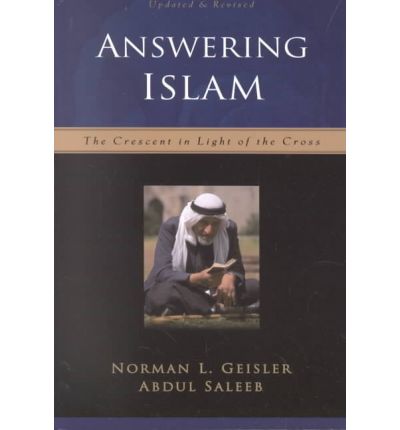
 

Dr. Emir Caner on the Path to Liberalism


Dr. Emir Caner on the Path to Liberalism

The path to liberalism is paved by an incremental process that places a question mark over the theological and historical veracity of Scripture. And of all doctrines where liberals desire to interrogate Scripture under its dim light of naturalistic presuppositions, none is more coveted than the doctrine of the resurrection. It is imperative, then, that Bible believers stand firm on the historicity and trustworthiness on this doctrine and

warn those, like Dr. Licona, who are undermining the historicity of parts of the Gospel record, even some texts associated with the resurrection, thus placing the resurrection of Jesus itself in jeopardy. Believers through the centuries have fought with their very lives to defend the complete truthfulness of Scripture; we cannot, in the name of friendships or sincere motives, let our guards down when a generation of new believers are relying on present Christian soldiers to take their proper stand.

Dr. Emir Caner
President of Truett-McConnell College
Cleveland, GA
February 6th, 2012

Truett McConnell

Book Review: Vital Issues in the Inerrancy Debate (2016)


Book Review of Vital Issues in the Inerrancy Debate

Christopher T. Haun[1]

[Click here >> Book Review – Vital Issues in the Inerrancy Debate to open this review as a PDF file.]

Title:

Vital Issues in the Inerrancy Debate
Publisher: Wipf & Stock
Date: 2016
General Editor: F. David Farnell
Contributors: F. David Farnell, Norman L. Geisler, Joseph P. Holden, William C. Roach, Phil Fernandes, Robert Wilkin, Paige Patterson, Shawn Nelson, Christopher T. Haun
PAGES: 563

PRICE:

$85.00 (Hardcover), $64.00 (Paperback)[2]

Kindle: $15.00 at Amazon.com


In Kurosawa’s classic film The Seven Samurai, desperate farmers convince veteran warriors to help defend their village and harvest from raiding bandits. Six ronin and one apprentice accept the challenge. After fortifying the village and giving the farmers a crash course in asymmetric warfare, the seven samurai lead the defense when the marauders return. Some of this story line and imagery came to mind as I read Vital Issues in the Inerrancy Debate (VIID) because first and foremost it is a defense.

Twenty-eight of its thirty-two chapters are written by six veteran scholars (holding PhDs in various fields). Four of its chapters are written by two MDiv candidates. In every chapter the authors are, as the preface says, “earnestly contending for the faith delivered once and for all to God’s people.” Every one of its meaty pages defends the traditional, conservative evangelical views of inspiration, inerrancy, and hermeneutics from the destructive use of biblical criticism. By extension they are defending all the propositions in and doctrines derived from the Bible.

VIID is an anthology of some of the best and most recent articles on topics of inerrancy, hermeneutic, and the quest for the historical Jesus. While it does weave in some of the history of the main clashes in the battle for the Bible in the twentieth century—such as the fundamentalist-modernist controversy, Barth and Neo-Orthodoxy, Fuller, Ladd, Rogers, McKim, the International Council on Biblical Inerrancy (ICBI), ETS and Robert Gundry—it doesn’t linger on them. Mainly it offers fresh and intelligent responses to the newest wave of challenges to the Bible offered by evangelicals in books like The Resurrection of Jesus (IVP, 2010), The Lost World of Scripture (IVP, 2013), Ten Guidelines for Evangelical Scholarship (Baker, 2013), Five Views on Biblical Inerrancy (Zondervan, 2013), Can We Still Believe the Bible? (Brazos, 2014), Lost World of Adam and Eve (IVP, 2015), Peter: False Disciple and Apostate According to Saint Matthew (Eerdmans, 2015), and I (Still) Believe (Zondervan, 2015).

Here is a sampling of the many thought-provoking questions which are discussed: How much emphasis should genre be given when doing interpretation? What is the nature of historical narratives? How do hermeneutics and inerrancy interrelate? Are the ideas of the International Council on Biblical Inerrancy still important and relevant? What do the three living framers of the Chicago statements (Sproul, Packer, and Geisler) say about the new hermeneutic and the redefinitions of inerrancy? How do we deal with difficult passages in the Bible? What did the framers of the ICBI statements really mean? Where should one turn to get clarification about the Chicago Statements? Are the academic institutions of the evangelical world failing to learn the lessons of the past? Was the Apostle Matthew an Apostate? Which view has continuity with the early church fathers, Augustine, Aquinas, the Reformers, the writers of the 12-volume The Fundamentals, and the old Princetonians? Is inerrancy just for Calvinists? How early were the gospels really written? Is inerrancy just a peripheral doctrine? Is inerrancy derived from inductive and/or deductive logic? Was Matthew really the only one to mention the raising of the saints in Matthew 27? What do the Church fathers say about Matthew 27? Did any ancient Romans detect the influence of Roman historiography in Matthew 27? Should inerrancy be used as a litmus test of orthodoxy? Are the tools of biblical criticism really neutral? Does purpose or intention determine meaning? What does “truth” really mean? Is an intentionalist view of truth an alternative to the correspondence view of truth? Why did Bart Ehrman drift from fundamentalism to liberalism? What was the conservative resurgence in the Southern Baptist Convention? Is there a resurgence of neo-evangelicalism? How does postmodernism fit into all this? Should the story of Adam and Eve be taken literally? Should organizations enforce their doctrinal statements amongst their own members? Does every scholarly evangelical organization lose its grip on inerrancy by the third generation? Should apologists defend both the Faith and the Bible? Should evangelicals send their budding scholars to earn PhDs at schools that specialize in biblical criticism?

VIID is provocative. The most controversial thing about the book is probably its willingness to name the names of many influential men. I’m not just talking about the old rascals like Bacon, Barth, Bart D. Ehrman, Bultmann, Darwin, Descartes, Hobbes, Hume, Kant, Lessing, Perrin, Reimarus, Schweitzer, Spinoza, Strauss, Tillich, Troeltsch, and von Harnack. VIID does mention them. But if focuses more on the also names the names of present and recent scholars, publishers, and bloggers: Ben Meyer, Birger Gerhadsson, Bruce Waltke, Carlos Bovell, Charles Talbert, Christopher Ansberry, Christopher Hays, Christian Smith, Clark Pinnock, Craig Blomberg, Craig Evans, Craig Keener, D. Brent Sandy, Daniel P. Fuller, Daniel Harlow, Daniel Wallace, Darrell Bock, David Capes, David E. Garland, Donald Hagner, Donald K. McKim, Douglas Moo, Edwin Yamauchi, E. P. Sanders, Ernst Wendland, Gary R. Habermas, George Eldon Ladd, Gerd Theissen, Grant R. Osborne, Gregory A. Boyd, H. C. Kee, Heath Thomas, I. Howard Marshall, J. Merrick, J. P. Holding, Jack B. Rogers, James Barr, James Bruckner, James Charlesworth, James Crossley, James D. G. Dunn, Jeremy Evans, James Hamilton, Joel N. Lohr, Joel Watts, John Byron, John R. Franke, John Schneider, John H. Walton, Justin Taylor, Ken Schenck, Kenton Sparks, Kevin J. Vanhoozer, Lee McDonald, Leith Anderson, Leon Morris, Martin Soskice, Matthew Montonini, Michael F. Bird, Michael Green, Michael R. Licona, Moises Silva, Murray Harris, N.T. Wright, Nick Peters, Nijya Gupta, Paul Copan, Paul Jewett, Peter E. Enns, Paul Ricouer, Peter H. Davids, Phillip Long, Richard Burridge, Richard Horsley, Robert H. Gundry, Robert W. Yarborough, Robert Webb, Scot McKnight, Stephen M. Garrett, Thomas Schreiner, Tremper Longman III, W. David Beck, Walter Liefield, William Lane Craig, William Warren, and William Webb. (I probably missed a few!) Many of these men are held in high esteem in by many evangelicals. And yet VIID says that each of these men have in some way and to some degree challenged the parameters delineated by the ICBI in The Chicago Statement on Biblical Inerrancy (CSBI, 1978) and The Chicago Statement on Biblical Hermeneutics (CSBH, 1983).

Standing in the watchman tradition of books like The Battle for the Bible (Lindsell, 1976), The Bible in the Balance (Lindsell, 1979), The Jesus Crisis (Thomas and Farnell, 1998), The Jesus Quest (Geisler and Farnell, 2014), and Defending Inerrancy (Geisler and Roach, 2011), an exposé of this scope runs the risk of being accused of fratricide, libel, divisiveness, disunity, faction creating, quarrelsomeness, malice, and nastiness. But really all of its authors do a remarkable job of contending without being contentious. None of the pages were stuck together with drops of venom. With a passionate concern they succeeded in “not be[ing] quarrelsome but . . . correcting his opponents with gentleness” (2 Ti. 2:4) and in “not regard[ing] him as an enemy but warn[ing] him as a brother” (2 Th. 3:15).

There is merit in the maxim “attack the idea, not the man who holds it.” Perhaps the Apostle Paul anticipated this question when he wrote, “We destroy arguments and every lofty opinion raised against the knowledge of God, and take every thought captive to obey Christ” (2 Co. 10:5). Ultimately the good fight of faith is not against people but against opinions and thoughts. But then must the defense always preclude the naming of names? As much as we might all prefer to avoid pointing fingers, it seems unavoidable at times. When specific professors are saying specific things to specific audiences, the defense cannot be sufficiently meaningful (certainly not in any actionable sense) unless specific names are named and their actual words are exposed and evaluated.

Also, in the act of naming names of men spreading ideas they deem corrosive to the orthodox faith, these watchmen are following apostolic precedents. The Apostle John named Cain as the old rascal who should not be imitated (1 Jn. 3:2) and named Diotrephes as the noteworthy contemporary antagonist inside the network of first-century churches. He described Diotrephes as one who does not properly recognize apostolic authority, who spoke “wicked nonsense” against them, and who should not be followed (3 Jn. 9-12). Similarly the Apostle Paul named Jannes and Jambres as the old rascals who will serve as patterns for many in these last days (2 Ti. 3:1-9). He also generalized that “all who are in Asia have turned away from me” and singled out Phygelus and Hermogenes as noteworthy examples (2 Ti. 1:15). Similarly he warned about Demas—a man who had been one of Paul’s coworkers and companions—because he preferred the world (2 Ti. 4:10). Paul also wanted church leaders to be wary of “Alexander the coppersmith” who “did me great harm” and “strongly opposed our message” (2 Ti. 4:14-15). He urged Timothy to “charge certain persons not to teach any different doctrine, nor to devote themselves to myths . . . which promote speculations rather than . . . a good conscience and a sincere faith.” These “certain persons” had “wandered away into vain discussion, desiring to be teachers. . . without understanding either what they are saying or the things about which they make confident assertions” (1 Ti. 13-7). He named three of them by name (“among whom are Hymenaeus and Alexander” and “among them are Hymenaeus and Philetus”). These were men who also were operating inside the first-century network of apostolic churches. They were insiders who had “made shipwreck of their faith” and “swerved from the truth.” They were “upsetting the faith of some” with “irreverent babble” that will “lead people into more and more ungodliness” and “spread like gangrene” (1 Ti. 1:19-20; 2 Ti. 2:16-18). Similarly the authors of VIID are attempting to warn the Bible-believing world that many of the professors at evangelical schools (who generally earned their PhDs from prestigious post-protestant, anti-evangelical schools) are leading evangelicals away from evangelical orthodoxy through the use of unorthodox methodology.

VIID also runs the risk of being accused of trying to stymie the progress of biblical scholarship, of trying to keep us stuck in the past, of interfering with the grand quest to “follow the truth wherever it leads,” and of thus being overall anti-intellectual and anti-scholarly. But VIID is an intellectual and scholarly attempt to discourage the use of corrosive literary criticism while encouraging healthy biblical scholarship. The authors urge considering of lessons of the past which show how the higher critical path leads not to pinnacles of illumination, enlightenment, and progress but to precipices of doubt. The application of feminist criticism, form criticism, genre criticism, historical criticism, Marxist criticism, midrash criticism, mythological criticism, New Criticism, new historical criticism, post-colonial criticism, post-structuralist criticism, psychoanalytic criticism, redaction criticism, rhetorical criticism, sociological criticism, source criticism, and whatever the next flavor of literary criticism that becomes vogue among secular scholars in the next decade all have one thing in common: They are critical and revolutionary by nature. Progress is made by challenging traditions and creating new knowledge with new wisdom. VIID insists that when evangelical scholars use secular literary criticism in their biblical criticism, it will ultimately lead to the same doctrinal graveyard that the neo-orthodox and liberal/modernist scholars filled in former decades with their use of higher criticism. The speculations produced during the exercise of critical methodologies is invariably given precedence over the plain meanings in the text of the Bible, once again the word of God is nullified for the sake of human traditions.

The neo-evangelical revolution is also changing the field of historical-evidential Christian apologetics. More than once VIID touches upon the rising tendency among evangelical biblical scholars to meet the historical critics on their own turf. They often create scholarly defenses for the big things—such as the general historical reliability of the gospels and the historical likelihood of the resurrection of Jesus—while being overly willing to amputate some of the seemingly less defensible and more dispensable propositions in the Bible. This innovative (non-classical) approach seems to be creating a division between those satisfied with defending a historical, creedal, and “mere” Christianity and those who would also defend the Bible in whole and part.

Some of VIID’s chapters are derived from articles originally posted at DefendingInerrancy.com, a website that has had more than 200,000 visits, 55,000 Facebook likes, and 48,000 signatures on its petition in support of The Chicago Statement on Biblical Inerrancy. These statistics suggest that the latest battle for the Bible has not been lost yet. In The Magnificent Seven, a western adaptation of The Seven Samurai, the plot is further complicated by the ongoing question of whether the villagers will allow the bandits to continue to fleece them or whether they will really rise up and join the veterans in the fight. What will the villagers in the evangelical village do about neo-evangelical and neo-orthodox scholarship that is robbing them of their doctrinal heritage? To borrow a phrase from the oaths sworn by those seeking either citizenship or high office in the United States, will we defend our constitution “against all enemies, foreign and domestic?” Will we fight the good fight of faith not just against the siegeworks erected outside the city walls but also against those that have been smuggled inside the walls? Or will we watch the undermined walls collapse mysteriously around us and wonder how our harvest was plundered again? For those fighting the good fight of faith, Vital Issues in the Inerrancy Debate deserves consideration.


Chapter by Chapter

The book begins with a one-page tribute to Dr. Norman Geisler by the other contributors for his decades of defending and commending the faith. Indeed he is “worthy of a double honor” (1 Tim. 5:17). The two-page foreword by Dr. Paige Patterson sets the tone well with a call to continued vigilance. Patterson also provides excellent insights into the history of the inerrancy debate. He was part of the International Council on Biblical Inerrancy (ICBI) and remembers it well. The two-page preface acknowledges the debt to the ICBI and adds another dimension to the history of the debate. The first 115 pages are devoted to defining inerrancy. The remaining pages are devoted to defending it.

The first chapter is titled “The Historic Documents of the International Council on Biblical Inerrancy.” It is 17 pages long and is largely a condensed adaptation of the book Explaining Biblical Inerrancy (Bastion Books, 2012). Geisler begins by pointing out that he is currently one of the last three living framers of the three statements produced by the International Council on Biblical Inerrancy. He writes to “dispel some contemporary misinterpretations of what the ICBI framers meant by inerrancy” and to set the record straight. He enumerates the four fundamental documents of the ICBI (all four of which are collected in Explaining Biblical Inerrancy) and the other important books produced by the ICBI. He explains why the ICBI view of inerrancy is important. He explains the four main areas where scholars on the more liberal end of the evangelical spectrum (and usually holding membership in the Evangelical Theological Society and signing agreement with CSBI) have ignored, misunderstood, or otherwise challenged the CSBI: (1) the meaning of “truth,” (2) the function of genre, (3) the nature of historical narratives, (4) the relationship between hermeneutics and inerrancy. He very ably bolsters these four areas. He also gives a subtle challenge to the Evangelical Theological Society to enforce their doctrinal statement among its members. This chapter also includes all the articles of affirmation and denial from the CSBI and CSBH. This may then be the first time these two statements have ever been put together in their entirely and placed into a printed book. This was an unbeatable choice for a first chapter. This is something everyone in the ETS and EPS should come to grips with. Those who appreciate this chapter will enjoy its expansion in Explaining Biblical Inerrancy.

Chapter two is titled “What Is Inerrancy and Why Should We Care?” It is only four pages long and is written by Geisler and Shawn Nelson. It begins with a brief explanation of the three “in’s”: Inspiration, Infallibility, and Inerrancy. It gives four reasons why inerrancy is important and ultimately an essential—not peripheral—doctrine. Pointing to CSBI as the standard for describing what inerrancy is and is not, it proceeds to explain that the historical view of inerrancy is under attack right now. It gives a focus on the new wave of challenges to CSBI that arguably began in 2010 with various published and spoken statements by apologist Michael Licona.

Chapter three is also by Nelson and is titled “A Voice from a New Generation: What’s at Stake?” Nelson makes it clear the attack upon inerrancy by Michael Licona in 2010 exposed a much bigger problem. Several highly esteemed scholars from the ETS (Craig Blomberg, William Lane Craig, Gary Habermas, Daniel Wallace, J.P. Moreland, W. David Beck, Jeremy Evans, Craig Keener, Douglas Moo, Heath Thomas, William Warren, and Edwin Yamauchi) publically voiced their support for Licona’s right to trump both CSBI and CSBH with form criticism and historical criticism. And this despite very clear statements in both ICBI statements on inerrancy (CSBI and CSBH) that guard against the exact type of maneuver Licona was using. Nelson gives a helpful tour of the historical views of biblical inspiration, infallibility, and inerrancy. He cites Clement of Rome, Polycarp, Pseudo-Barnabas, Papias, Ignatius of Antioch, the Shepherd of Hermas, the Didache, and the Epistle to Diognetus, Justin Martyr, Tatian, Tertullian, Hippolytus, Origen, Cyprian, Eusebius, Athanasius, Cyril, Jerome, and Augustine. He also gives a helpful and concise tour of how the thought of Bacon, Hobbes, Spinoza, Hume, Kant, and Darwin led to a growing popularity of biblical errancy. He distinguishes between Evangelical, Liberal, and Neo-Evangelical views. He projects that the erosion of inerrancy will lead to further doubt and uses the regress of Bart Erhman as an example we should learn from. He makes additional arguments for the importance of an uncompromising view of inerrancy and ends with recommendations for staunching the decay.

Chapter four is written by F. David Farnell and titled, “Evangelical Mentoring: The Danger from Within.” With a shepherd’s heart and a scholar’s eye, Farnell starts by contrasting faithful mentoring with radical mentoring. A considerable amount of Jesus’ earthly ministry was in opposition with those who had interpretations of the Bible that made null the Word of God null. These men were disciples in a tradition and they were making disciples in that tradition. Jesus chose disciples like Peter and Paul to carry on his traditions and make disciples. Paul was a mentor to reliable men like Timothy and Titus. These men were to be mentors to other faithful men who could teach others. Farnell reminds us that some traditions attempt to stay faithful to the apostolic tradition and to the scriptures while other traditions do not represent them faithfully. In a way, it all comes down to mentoring. Against this backdrop he explains his concerns over some of the eighteen professors showcased in the 2015 book titled I Still Believe. He focuses upon the testimonies of Donald Hagner, Bruce Waltke, James Dunn, and Scot McKnight. He’s left questioning whether many of the professors—the teachers of the future teachers—in many evangelical institutions are passing on doubts rather than faith to the students who have been entrusted to them.

Chapter five is a review by Geisler of the 2013 book Five Views on Biblical Inerrancy (FVBI). He begins by pointing out three serious problems with the approach of this book. Having five views in dialogue for inerrancy suggests that inerrancy is “up for grabs” when it really is not. There are not five views. There are ultimately two views. Either the Bible contains errors and contradictions or it does not. Also, of the five authors, only one is an actual inerrantist; the other four are varying degrees of errantists. The deck seems stacked. And since the book was to discuss the CSBI, why were none of the three living framers of the CSBI (Sproul, Packer, or Geisler) asked to participate in a dialogue? His review is 39 meaty pages in length. It’s daunting to try to summarize it. He points out that the Evangelical Theological Society officially adopted the CSBI as its definition of inerrancy. He provides five reasons for the importance and fundamental position of inerrancy. He notes that some of the authors of FVBI misunderstand “truth” and some of them wrongly assume purpose determines meaning. Propositional revelation, accommodation, lack of precision, the role of extra-biblica data, the role of hermeneutics, and the role of extra-biblical genre, pluralism, conventionalism, and foundationalism are all discussed. Geisler nails the coffin lid shut on the question of whether Licona’s views can be harmonized with CSBI and CSBH by pointing out that all three of the remaining framers of the Chicago statements (Sproul, Packer, and Geisler) have confirmed that they cannot. The story of ETS and Robert Gundry is retold. Examples of dealing with bible difficulties (what some of the authors of FBVI would call contradictions) in the OT and NT are given. Geisler also answers the errantists charges against inerrantists of being unbiblical, unhistorical, using the slippery slope argument, being parochial, unethical, divisive, and unloving. Reading this chapter reminded me that Geisler deserves the tribute that the book begins with.

Chapter six is by Dr. William Roach and is titled “The 2015 Shepherds’ Conference on Inerrancy.” John MacArthur and The Master’s Seminary hosted a conference on inerrancy in March 2015. They reaffirmed the importance of holding to total inerrancy and to defining it as the CSBI did. This seven page article reports positively on that conference.

Chapter seven is a fascinating interview William Roach conducted with Paige Patterson. They discuss the conservative resurgence in the Southern Baptist Convention and how their seminaries were rescued from errantism. It discusses what interplay there was between it and the ICBI.

In chapter eight Geisler answers the question of whether one has to be a Calvinist to believe in inerrancy. Many of the leaders of the later ICBI inerrancy movement were

strong Calvinists but most of the signers of the ICBI statements on inerrancy identified as moderate Calvinists, Cal-minians, Arminians, Wesleyans, “or some other label.” Geisler establishes continuity with Augustine, Aquinas, Luther, Calvin, Warfield, Hodge, Wesley, and other Wesleyans. He shows how they upheld inerrancy. He concludes, “Inerrancy is neither a late nor a denominational doctrine. It is not provincial but universal. It is the foundation for every group that names the name of Christ. . .”

Chapter nine is where Geisler reexamines the relationship between inerrancy and hermeneutics. He is tackling the claim that is made by those who defend the attacks against CSBI and CSBH by saying, “Leave him alone. It’s just a matter of interpretation, not of inerrancy.” This could be the most important chapter of the book as it tackles what may be the thing that evangelicals have had the hardest time understanding. Today many evangelicals can try to claim to be inerrantists and to agree with CSBI while promoting hermeneutical gymnastics to trump inerrancy. Yet it was clear to the wise leaders of the ICBI that after producing the CSBI still had to proceed to create the CSBH. What good is it to reinforce the front door while leaving the backdoor unlocked? Geisler discusses how this played out with the controversies surrounding Jack Rodgers, Robert Gundry, Paul Jewett, and Michael Licona. He challenges various assumptions: inspiration and interpretation are separate matters, allegorical interpretation, truth is not correspondence to facts, biblical narratives are not necessarily historical, hermeneutic is neutral, and more.

In chapter ten Geisler responds to William Lane Craig’s advocacy of limited inerrancy based on inductive logic and his argument against unlimited inerrancy as based on deductive logic. Naturally Geisler begins with the question of whether inerrancy has an inductive or deductive basis. Explaining the “false disjunction,” the chapter quickly becomes a delight for those of us who appreciate logic. He then proceeds to tackle Craig’s claims that only the author’s intentions (and not all affirmations) are inerrant, that only essential matters are inerrant but not peripheral matters, and that extra-biblical genre determines the meaning of biblical texts. He discusses the question of genre and explains how inerrancy is an essential doctrine. He discusses Licona’s errors. He contrasts the evangelical and neo-evangelical views of inerrancy and reminds that the ETS adopted CSBI in 2006 as its definition of inerrancy. Geisler also makes the important correction that Kenneth Kantzer, the professor Craig claims to have learned the doctrine of inerrancy from, was actually a committed follower of the Warfield-Hodge view of total inerrancy. Kantzer would have been “clearly opposed to the Craig-Licona view of limited inerrancy.” He also reminds Craig that Packer, Sproul, and Geisler have all confirmed that Licona’s view of Mt 27 (which Craig also essentially holds) is not compatible at all with CSBI or CSBH. He concludes saying, “Thus evangelicalism is the rightful owner of unlimited inerrancy, and those professed evangelicals who modify it or limit it to redemptive matters are, at best, the rightful owners of the term Neo-Evangelical.”

Chapter eleven is by Farnell and is titled “Early Twentieth Century Challenges to Inerrancy.” Encouraging us to learn from history in order to not repeat its mistakes, Farnell compares what was happening in the early twentieth century (with the fundamentalist-modernist controversy) and what is happening here in the early twenty-first century (with the evangelical-neoevangelical controversy). The parallels seem uncanny. He explains how and why the The Fundamentals was produced and “left as a testimony by the faithful to the early twentieth-century church’s experience of the attack on orthodox Protestant beliefs, conducted aggressively by higher criticism, liberal theology, Catholicism. . . , socialism, Modernism, atheism, Christian Science, Mormonism, Millennial Dawn, Spiritualism, and evolutionism that had infiltrated its ranks and subsequently caused great damage within the church with regard to its vitality and theology. Above all, they left it as a warning to future generations in hopes of preventing a similar occurrence among God’s people in the future.” Farnell points out that after the divinity schools fell to modernism new schools like Westminster Theological Seminary, Dallas Theological Seminary, and Fuller Seminary were planted to serve as bastions of conservative, biblical doctrine, inerrancy, and the fundamentals of the faith.

In chapter twelve, Farnell picks up where he left off in chapter 11. He discusses the challenges (or crisis) in the twenty-first century caused largely by fundamentalist or evangelical scholars seeking the respect of mainline academia. Many of the young scholars were sent to Ivy League, British, or Continental European schools to earn their PhDs. Many schools began to hire professors who were from these schools that were dominated by theological liberalism. With them came the neo-orthodoxy of Karl Barth. He explains how Fuller Seminary drifted away from evangelical views about the Bible and became rather neo-evangelical. He discusses Ladd, Lindsell, Rogers, McKim, Woodbridge, Gundry, Barr, ICBI, ETS, Blomberg, Silva, Geisler, The Jesus Crisis, Bock, Webb, Osborne, The Jesus Quest, the third quest for the historical Jesus, Perrin, Ladd, Roach, Defending Inerrancy, Sparks, McCall, Thompson, Yarbrough, Linnemann, Gundry, more Blomberg, Dan Wallace, Bill Craig, Hagner, Ehrman, and more. This provides an excellent history which filled in many gaps for me. It shows that critical scholarship is still going today where it went in the past.

Chapter thirteen is titled “The Resurgence of Neo-Evangelicalism: Craig Blomberg’s Latest Book and the Future of Evangelical Theology.” Here William Roach provides a concise but helpful historical backdrop of the controversies over inerrancy. He is primarily critiquing Craig Blomberg’s book Can We Still Believe the Bible? But he also weaves in some other recent works by neo-evangelicals who advocate errantism. He corrects some inaccuracies and confirms that Blomberg is yet another scholar who is “now willing to move beyond the vision and legacy of classic evangelicalism and the ICBI.” In his critique of Blomberg’s ideas he also weaves in many other related bits with mastery of the subject matter.

In chapter fourteen Phil Fernandez describes how the battle for the Bible has begun again. He begins by saying, “This chapter is not meant to divide brothers in Christ. Rather, it is a call to honesty. Those who call themselves evangelicals must truly be evangelicals. . . . If we sign a doctrinal statement, we must actually believe what we affirmed in that statement. We should not have the liberty to redefine the doctrines addressed in that statement. . . . this chapter should not be understood as an attack on Christian brothers. Rather, it is an indictment on the present state of evangelical scholarship itself.” He explains how the battle for the Bible raged in the 1970s and how it led to the ICBI. He discusses the reason for Robert Gundry being asked to leave the ETS and how the ETS did not vote Clark Pinnock out. He also sees a revival of the battle for the Bible starting with Mike Licona in 2010. He discusses the problems of genre and historiography in a way that harmonizes well with the other chapters but which also remains distinct. One thing that stood out to me was the way Phil tied in the minimal facts case for the resurrection. He says, it “is a great way to defend the resurrection. But, we must never allow the minimal facts case to evolve into a minimal facts evangelicalism or a minimal facts New Testament scholarship.” He challenges the ETS to enforce and even enlarge their doctrinal statement.

Chapter fifteen considers the question of whether or not biblical inerrancy as a “litmus test” of evangelical orthodoxy. This was written by Christopher Haun in response to a blog post written by Daniel Wallace. Wallace had pointed out that Carl F. H. Henry remained averse to setting biblical inerrancy as the litmus test of orthodoxy. Haun attempts to show how Wallace is partially right and partially wrong. He clarifies Henry’s position using several quotes by Henry himself and some by Ronald Nash.

Farnell is asking “Can We Still Believe Critical Evangelical Scholars?” in chapter sixteen. He reminds us of how vibrant Christianity had been in the 18th and 19th centuries and then asks how so many churches and cathedrals are boarded up now. How did British and Scottish universities become spiritually dead? And why do American evangelicals still go there to get their PhDs?  He explains that the change was internal. He explains a few forces of change and talks about why things were different in the United States. One of the differences is that two wealthy laymen paid for a project that would produce the twelve volume set of The Fundamentals between 1910 and 1917. Three million of those volumes were distributed. As schools like Princeton succumbed to the forces of apostasy, schools like Westminster Theological Seminary, Dallas Theological Seminary, and Fuller Theological Seminary were started. He compares the similarities between the 20th and 21st century scenes and encourages us to learn the lessons of the past. He discusses some of the harmful ideas of Ladd, Blomberg, Hagner, and more.

In chapter seventeen Farnell discusses “The ‘Magic’ of Historical Criticism.” This is a 59 page essay.

In chapters 18 and 19, Farnell gives a “Critical Evaluation of Robert H. Gundry’s Westmont College Lecture, ‘Peter: False Disciple and Apostate according to Saint Matthew’”

In chapter 20 Geisler and Farnell provide “A Critical Review of Donald Hagner’s ‘Ten Guidelines for Evangelical Scholarship’”

Chapter 21. Geisler sets the record straight on “On Licona Muddying the Waters of the Chicago Statements of Biblical Inerrancy and Hermeneutics.”


Chapter 22. Geisler sets the record straight on “The Early Church Fathers and the Resurrection of the Saints in Matthew 27:51–54.”

Chapter 23. Geisler reviews Craig Blomberg’s book Can We Still Believe in the Bible? He shows how Blomberg’s views contradict, misunderstand, and attack the ICBI view on inerrancy. He responds to Blomberg’s Defense of Robert Gundry, Murray Harris, Mike Licona

Chapter 24 | ICBI Inerrancy Is Not for the Birds | Joseph Holden responds to the “current trend among evangelical New Testament scholars to utilize or approve of genre criticism (e.g., Craig Blomberg, Michael Licona, Darrell Bock, Michael Bird, Carlos Bovell, Kevin Vanhoozer, et al.) to dehistoricize the biblical text appears to stem from an aversion to the correspondence view of truth.”

Chapter 25. Contemporary Evangelical NT Genre Criticism Opening Pandora’s Box? Joseph M. Holden

Chapter 26 | Book Review: Craig Blomberg’s Can We Still Believe the Bible? |Joseph M. Holden

Chapter 27 | Book Review: The Lost World of Adam and Eve | Norman L. Geisler

Chapter 28 | An Exposition and Refutation of the Key Presuppositions of Contemporary Jesus Research | Phil Fernandes

Chapter 29 | Redating the Gospels | Phil Fernandes

Chapter 30 | Misinterpreting J. I. Packer on Inerrancy and Hermeneutics | William C. Roach and Norman L. Geisler

Chapter 31 | Can We Still Trust New Testament Professors? | Bob Wilkin

Chapter 32 | Christopher T. Haun explores the question of whether ancient Romans detected the influence of Roman historiography in Matthew 27:45–54 or not. He puts the theory that Roman historians influenced Matthew’s way of reporting history to the test by examining thirty case studies where ancient Romans referred to one or more of the events in Matthew 27:45–54. Did any of the ancients interpret these events less than literally? He also revisits the three case studies that Licona cited in The Resurrection of Jesus.

Epilogue | Historical Criticism vs. Grammatico-Historical: Quo Vadis Evangelicals? | F. David Farnell

Appendix: Statements on the Importance of Inerrancy from Prominent Christian Leaders

[1] Christopher T. Haun is a Master’s Degree candidate at Veritas Evangelical Seminary and an editorial associate at Bastion Books. This book review was written for the April 2016 issue of the Journal of the International Society of Christian Apologetics.

[2] To purchase at a 40% discount, use “inerrant” as a coupon code upon checkout at http://wipfandstock.com/vital-issues-in-the-inerrancy-debate.html. Also available at http://www.amazon.com/Vital-Issues-Inerrancy-Debate-Farnell/dp/149823724X